This Sacred Body / This Bloody Mind
A Zero Parades review for Dead Spies.

I know how it is to be Harry Du Bois. I've tried to find the salve for sorrow at the bottom of an empty bottle. I've imprinted messages in my lungs my future self will have to decode. I've tried drinking myself to oblivion, howled while listening to a sad song about a tiny church: "I do not want to be this kind of animal anymore!"
I know how it is to be Hershel Wilk, codename: CASCADE. A talented fuck-up, forever tasting success and failure under the all-encompassing mantra of just-winging-it, prone to states of delirium, panic attacks, and onset fatigue. I left a Whole Sick Crew back home. Some of them are gone now. The others? Haven't talked to them in years.
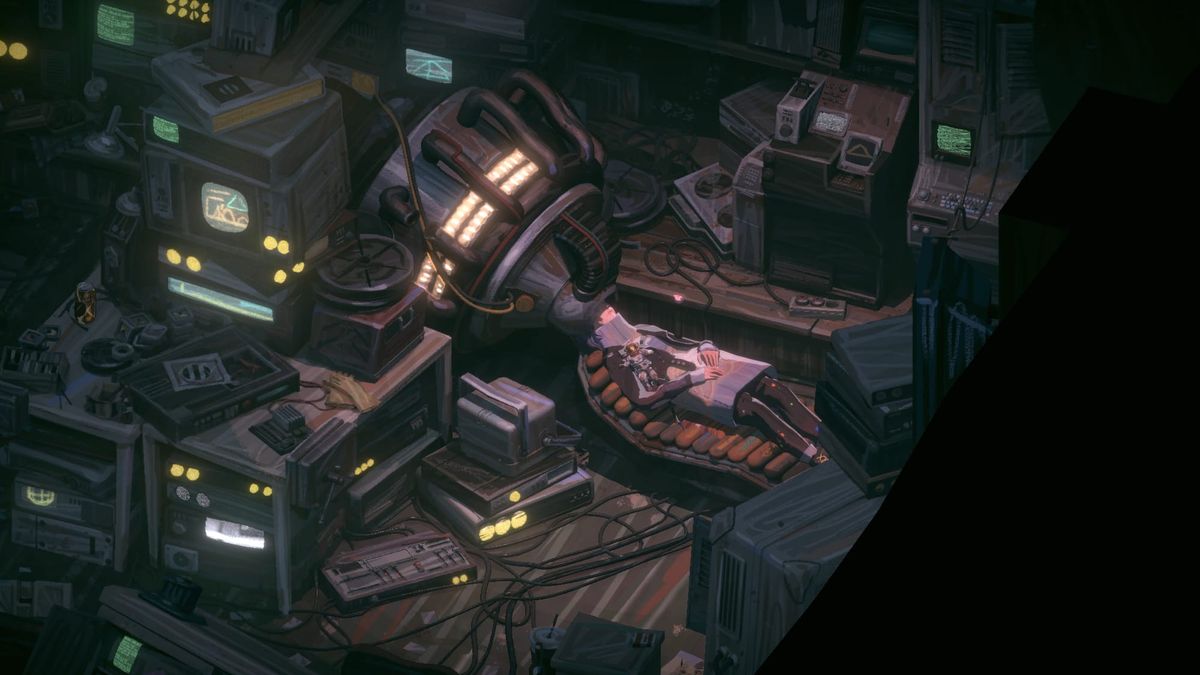
CASCADE is a communist spy for the Superbloc. After a colossal fuck-up five years ago, CASCADE was relegated to the Freezer, menial archive work for her spy agency, the Opera, and all her assets – her friends, her crew – either disappeared underground, were picked up and tortured by the techno-fascist secret police, or killed by those same Weeping Eye. She awakens mid-dissociative episode, back in the Theater, in a dusty room in sunny Portofiro, to find a catatonic partner and no inkling of her actual assignment.
The introduction to ZA/UM's sophomore videogame, Zero Parades: For Dead Spies, immediately calls back to Disco Elysium's starting setpiece, in which an alcoholic cop awakens with amnesia and is immediately tasked with resolving a murder. The similarities are plentiful: both games follow the same formula of conversations, skill checks through tabletop dice rolls, an appalling sense of fashion (if min-maxxing), and protagonists that—despite their fragmented minds, debilitating substance abuse, and mental health issues—are unnaturally talented.
Zero Parades is inseparable from both its predecessor and the tarnished image of the studio. I could not play the game without both of these facets peering into my mind, fogging my view of the game. It is mired in the mythmaking of Disco Elysium and its creators. In its worst moments, Zero Parades plays like a sorry imitation of Disco Elysium. In its best, it reaches for singularity, and strives and falters in the same ways Disco Elysium’s greatest moments did.
What happened to Disco Elysium happens to many games: it was made a golden calf, and its creators elevated into Gods.
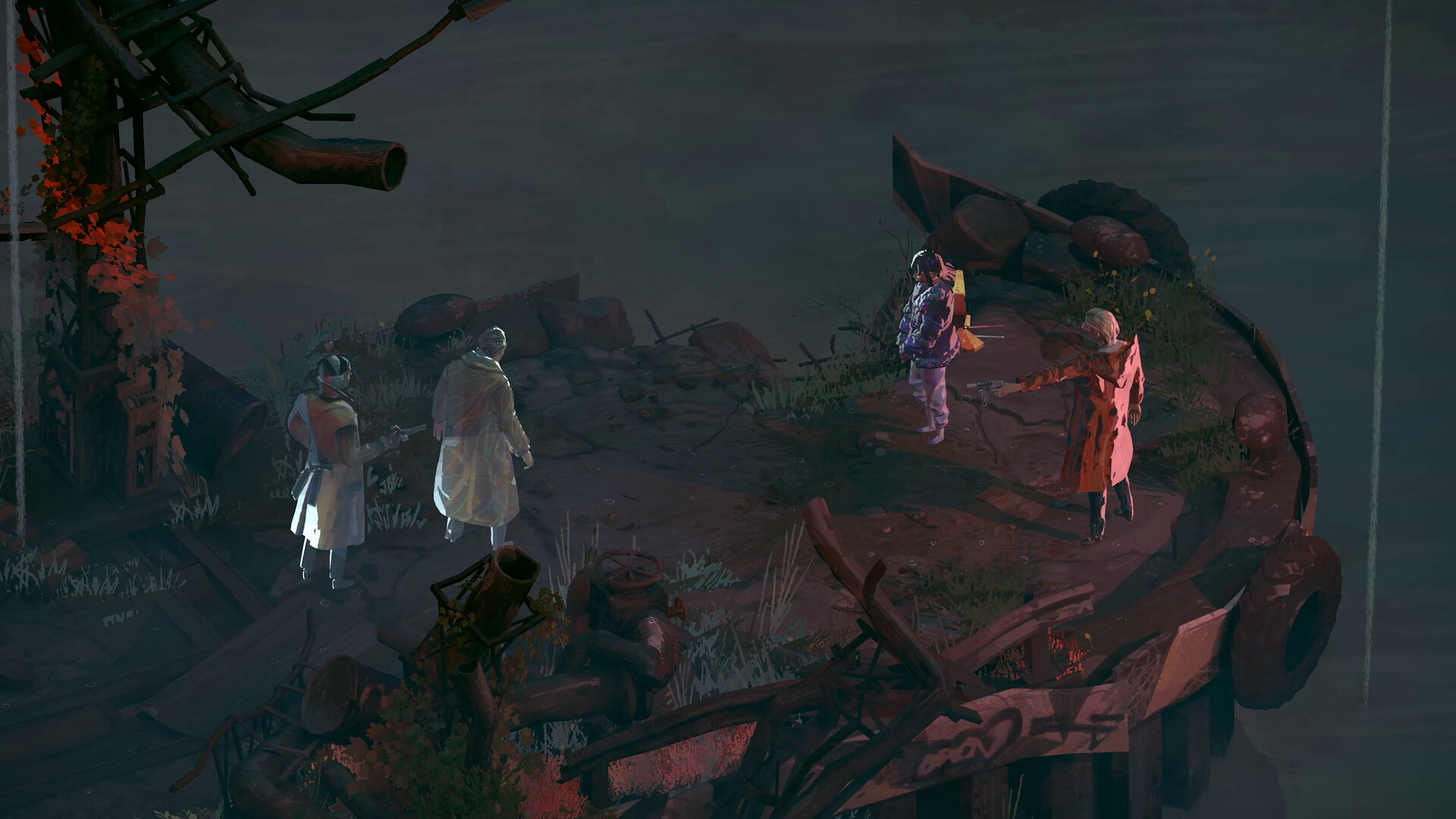
To say the same studio made both games would be inaccurate. I am, of course, alluding to the infamous ZA/UM debacle: the ousting of lead writer Robert Kurvitz, lead artist Aleksander Rostov, writer Helen Hindpere, and many, many, others(1). A great schism that has birthed multiple studios all undertaking their own attempts at reproducing the lightning-in-a-bottle that is Disco Elysium.
According to legend, a ragtag group of self-professed communists wanted to make a videogame, but they did not know how to sell, market, or publish said game. So they hired capitalists to do that, to great success with over 5 million copies sold. The dirty capitalists then did a capitalism, fired the creative minds behind the game, started selling overpriced clothing, and, somehow, managed to develop and release a new game.
What makes the ZA/UM debacle particularly complicated is that it was very public, very messy, and, seemingly, very personal for all parties involved. These types of occurrences are quite common in the industry, replete with weekly layoffs and creators getting financially screwed out of their own creative work, but rarely are their inner workings so public. Rarely is the studio that makes a sequel composed by all the same people that made the precursor.
I understand the reaction many fans had: it's a disgrace that the people who literally created the visual and literary identity of Disco Elysium were involuntarily let go from the studio they helped create. But I wholeheartedly disagree with a particular sentiment, mostly present on social media, that playing Zero Parades crosses some sort of picket line (skip to 18:35). That Zero Parades is a game made by horrible people, and thus it itself is a reprehensible game. While I disapprove of the decisions that led to the debacle, I know ZA/UM is currently composed of hundreds of different workers, who are all there for the purpose of making art. The ZA/UM that created Disco Elysium is very different from the ZA/UM that created Zero Parades, sure, but there is overlap between people who worked on Disco Elysium: Final Cut and Zero Parades. Furthermore, many are able to focus on the supposed anti-communist tendencies of ZA/UM's new masters while conveniently forgetting that it is the first unionized game studio in the UK.
I believe many people saw Disco Elysium as an explicitly communist videogame, which is an opinion I wholeheartedly disagree with. So when the debacle happened, battlelines were drawn: just like the core of Disco Elysium's ideological conflict, it was everyone vs the communists. Mythmaking is always based on some version of truth, some epistemological approach to the world. It is true that Kurvitz self-identifies as a communist, it is true he was the originator of Disco Elysium, and it is true that he was unfairly fired from ZA/UM.
Disco Elysium and Zero Parades are informed by Marxism and Communism, but that is simply not the same as espousing and inspiring communist thought. Even a Marxist read of the game fails to support the argument that it's a communist game. Colin Spacetwink already made the argument that Disco Elysium's approach to communism is tongue-in-cheek and rather insincere, and so fails to present a proper message on revolution, material reality, and building socialism:
"You’re not going out to fight the revolution: you’re going back to being a cop. You’re going to try and be a good cop, but you’re still a cop, and this is where you’re ending up even after the phasmid told you to “do it for the working class”. You are returning to a status quo with a better perspective, but you are not shooting for the personal, material change that’s necessary for Harry, for Revachol, to chase and fight for that belief in communism. Where it dares to dream of enduring change is localized to the police station that Harry reports to. You don’t have to look at our real world to know that trying to have ‘good cops’, to the extent that such a thing could exist, is not going to build the bridge towards a truly better world; Disco itself insults this idea near the very beginning when an answer you can give on the politics of its world is that “We are living in the cop regime”. A more effective and personally nicer brand of law enforcement is still going to end with a boot on people’s necks."
Colin gets it right but fails to name what I am about to name: the contradictions of Harry DuBois' malleable identity are the point of the game. It's this same ethos that carries over to Zero Parades, with CASCADE taking the stage, different team and all. The games are less interested in espousing 'correct' Communist ideology than they are at trying to present Harry and Hershel as the sensorial body-minds exploring and reacting to a decayed world and culture.
I do believe, however, that gamers are rarely interested in confronting the methodologies under which games are made: it's the exact same reason why layoffs happen every week in the videogame industry but the enthusiast media continues on, business as usual. People want their treats and to not think about the human cost of their hobby. So I see these reactions arising from the belief that critics are choosing to ignore these unethical economic modi operandi, but that is also simply not true. Diego Arguello did a spectacular job at contextualizing the ZA/UM debacle in his review of Zero Parades, and Kaile Hultner wrote an equally splendid piece focusing on the game itself as a cultural product, separated from the mire of its controversies; treating it as a crowning achievement not for the damned dirty C-suites and executives of ZA/UM, but for the rank-and-file workers, who clearly put so much passion and love into the game. It is not critics that are engaging with Zero Parades or Disco Elysium in bad faith, for the most part, but audiences.
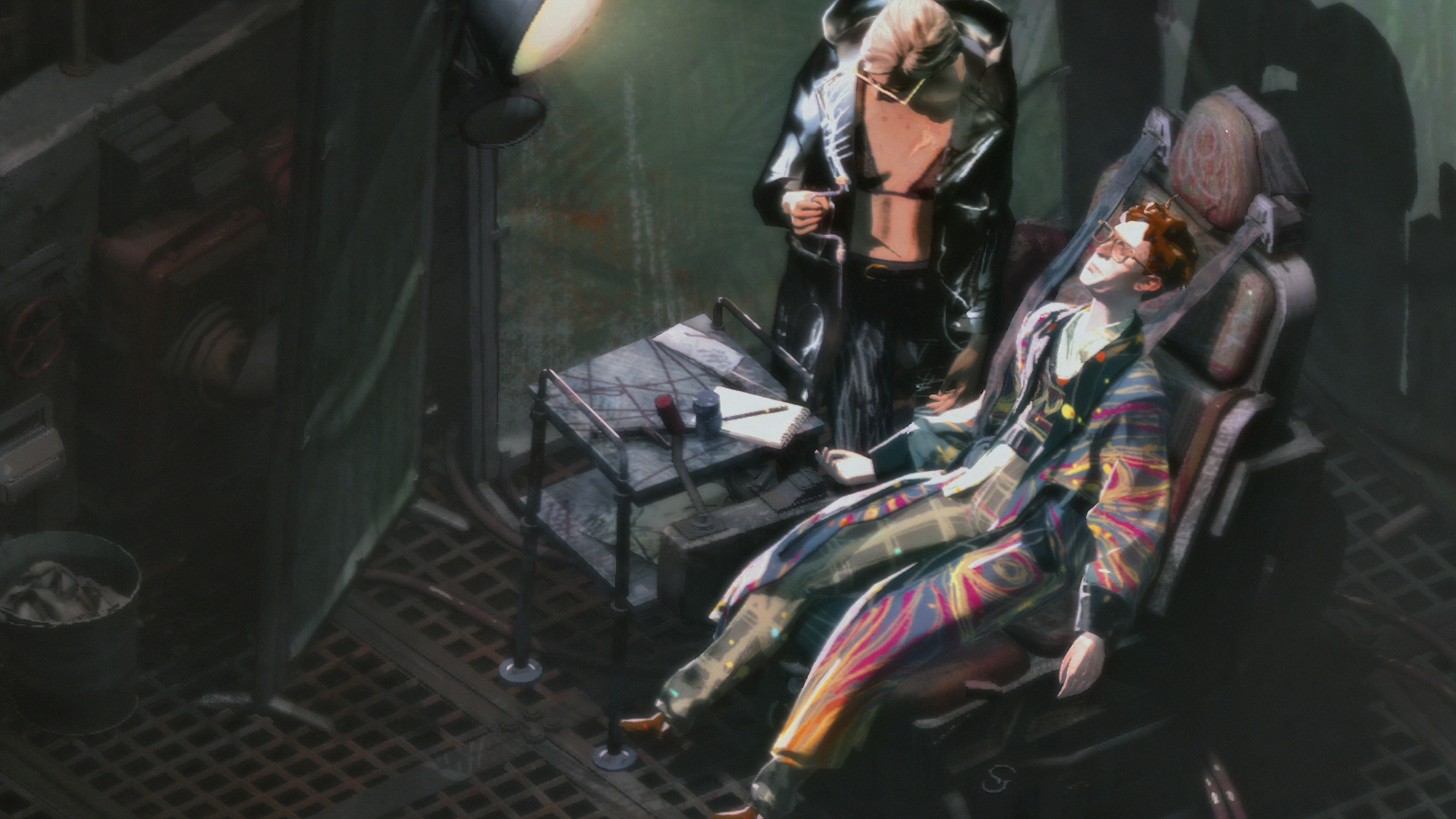
Zero Parades grew on me as I uncovered more of its story, but my initial assertion was that the writing was duller, the art style a ghost of Rostov's surreal portraiture, missing the soul. I do not believe in auteur theory, I believe games are collaborative efforts, and while it is undeniable that the lead writer, or the director, or head artist of a game have a great influence on the final product, I do not believe their decisions are the only ones that affect a game's artistry. This was primarily the reason why I wanted to give Zero Parades a fair try despite my feelings over the debacle: despite the fact Kurvitz and Rostov weren't involved, I knew there were still plenty of people in the company's shadow working to make something great.
The easiest way I can explain my general sentiment is that Disco Elysium had to be born. Its world went through decades of concepting, bled into an entire separate novel, and founded various iterations as a tabletop RPG before it became the video game we know today. Zero Parades exists because a board room decided it needed to happen. It reads like a post-mortem publication of a celebrated author's work, as if a manuscript had been found under their bed and a different, yet still incredibly talented, writer was tasked with finishing a rough novel draft.(2)
I'm not the only critic to notice this: it is not that Zero Parades' writing and aesthetic caliber is not up to par with its predecessor — if you like the well-written words and lyrical flow of Disco Elysium then Zero Parades will deliver in spades – but that it somehow still feels lacking. Nic Reuben said it best:
"[Zero Parades] is often hilarious, full of fascinating and poignant worldbuilding and tragic circumstance, but it has little of Disco's messy, easy strangeness or meandering melancholia. It is sleeker, sexier, more self-consciously dangerous. It is outsider art made from the foyer, safe from the rain"
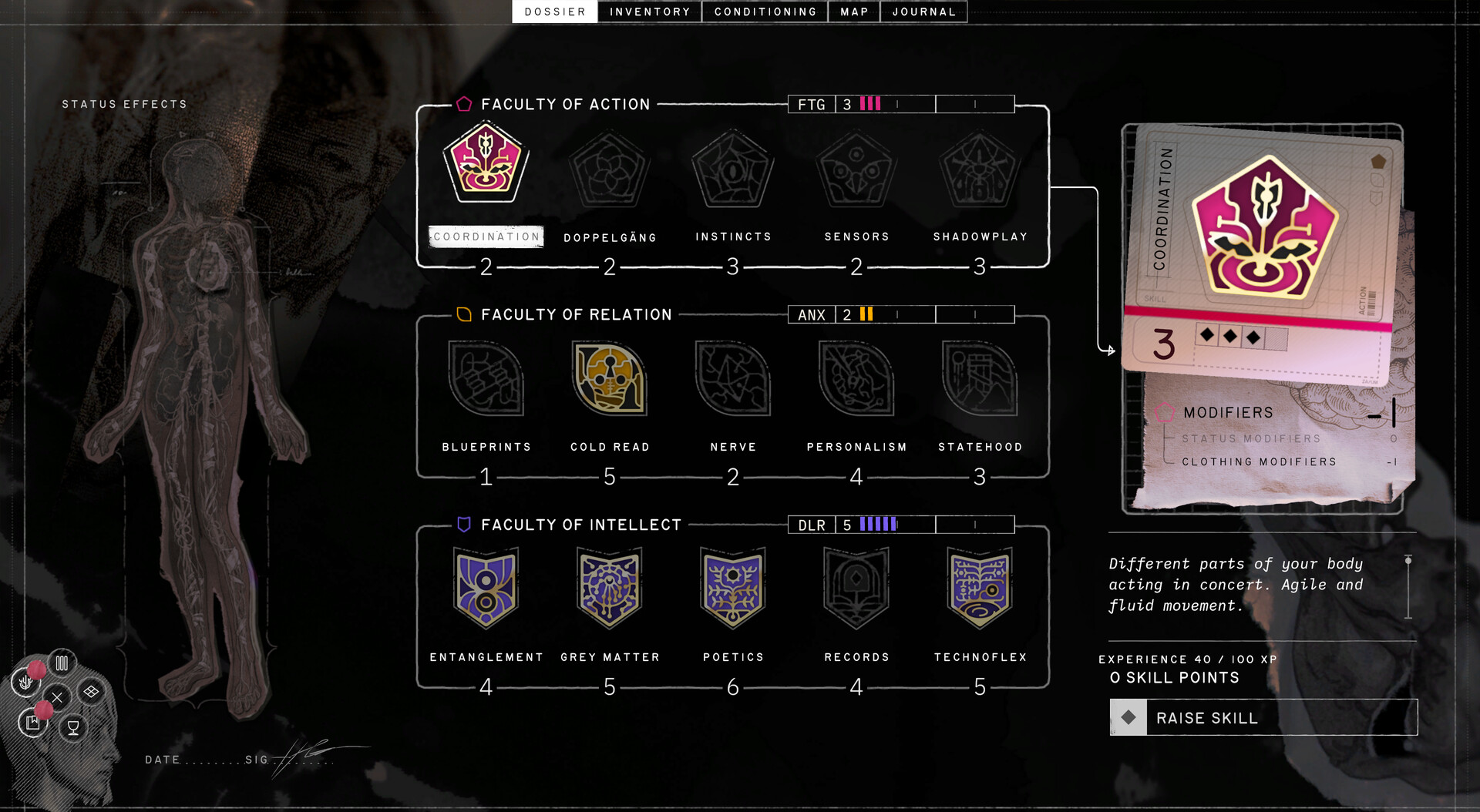
I could espouse more on its gameplay but, as a successor to Disco Elysium, it contains the same mechanical simplicity: you walk around, pick up items, talk to people, kiss your dice before rolling them for a skill check, gain EXP, level up said skills, etc. The 'game' portion of Disco Elysium was never its most interesting aspect. Zero Parades, then, engages in the act of rebranding rather than evolving: to reflect CASCADE's own complicated psyche as a Communist spy, her AUTHORITY is replaced by STATEHOOD, how she can impose the will and wants of the State unto subjects and herself; she COLD READs a room rather than engage in EMPATHY; she SENSES rather than SHIVERS; she harnesses the strength of her internal DOPPELGANGER rather than rely on her body as a PHYSICAL INSTRUMENT, unlike the bulkier, stronger, masculine Harry.
The only evolution on the gameplay side can hardly be called that: "dramatic encounters" are moments that lock you in supposedly tense setpieces in which you have limited options, and so must rely on the skills you have at that moment and nothing else. This was an attempt to swerve the ways in which players could pass any insurmountable challenge by upping their skills via downing alcohol, cigarettes, pills, changing their wardrobe, or pumping saved-up points into required skills, but they play too similarly to the equally fleeting red skill checks (which you can only try once) and are too sparse throughout the game to leave any lasting impression.
It is gameplay innovation by boardroom—which is to say, no steps forward at all. The game’s inability to advance its systems feeds into the comparison: the game, through iteration and refresh, replicates its predecessor, and carries with it its weaker elements even if they are more focused. Zero Parades is tied up in its predecessor entirely: its visual identity, its systems, its writing is always imitating the messier, more sardonic Disco Elysium. This leaves Zero Parades as a bit of an unkempt child striving to be its big sibling, doomed to being compared to them for all eternity, and unable to reach an engrossing identity or its own or a willingness to try something new.
When people tell me Disco Elysium is a game about cops, psychology, mental health, the male loneliness epidemic, or Marxism, I say: no, it's about so much more. If there's a through-line to the protagonists of ZA/UM's two games, Disco Elysium and Zero Parades: For Dead Spies, is that they represent the intricacies, complexities, and paradoxes of being a human animal.
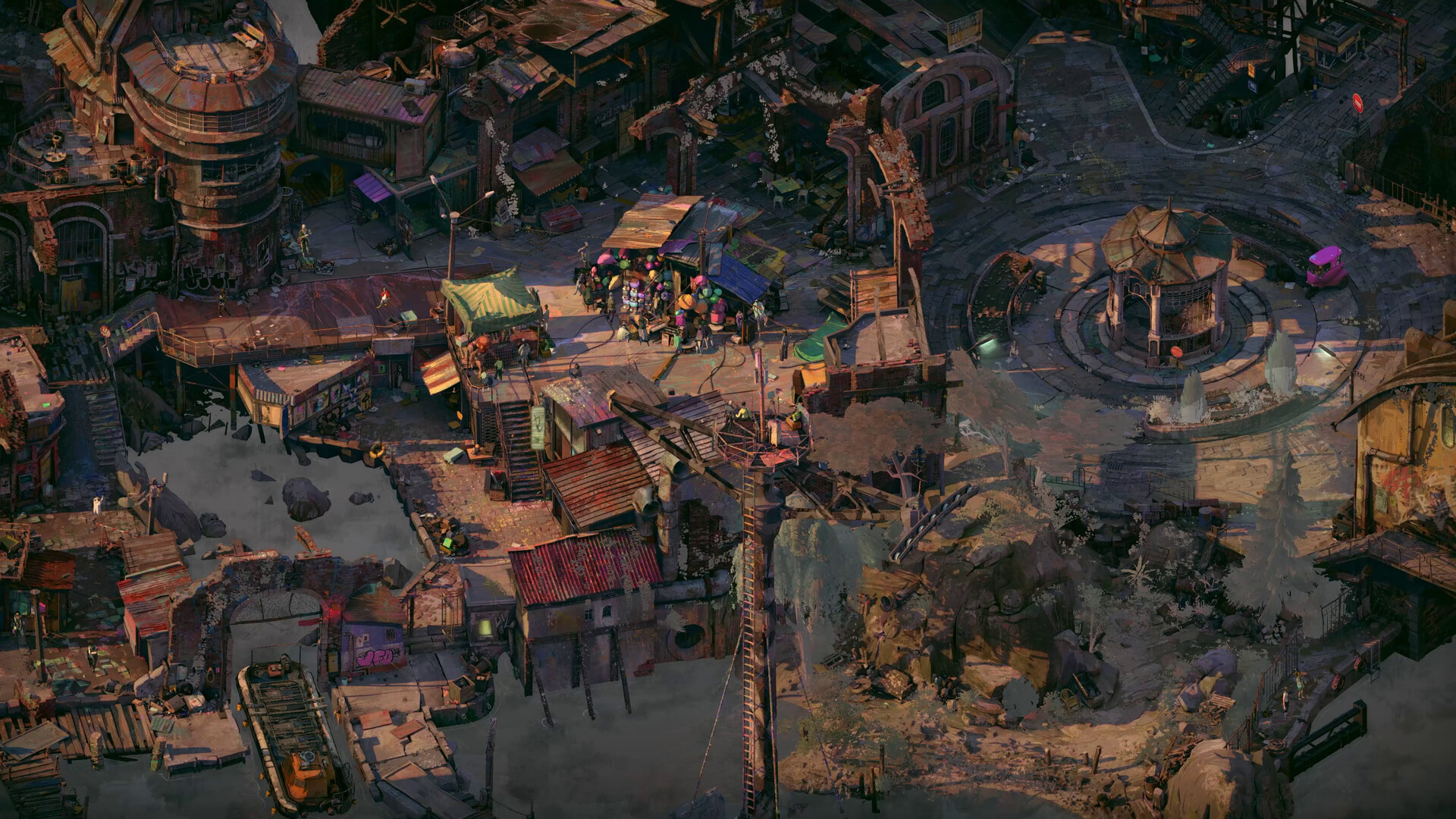
Equally, a superficial read of Zero Parades would be to state it is a game about forgeries, authenticity versus imitation, espionage, international conflict, whereas I believe it is primarily worried about another aspect: culture. In Zero Parades, culture is the battleground. And it is, funny enough, culture drawn along political lines: it's techno-reactionary culture versus everyone. The former's reach is everywhere: from La Luz, the Illuminated Empire has spread its eschatological doctrine via radio waves, muttering and sparking with hyperpop beats; via their technological and scientific advancements; via the fact that no one appreciates their own culture anymore, they simply engage in reflection and nostalgia. The locals wistfully remember when there were feedback parties down Party Alley, while their children consume Luzian shows about animated killer wolves and theif teens listen to death-tinged pop lyrics with suicidal fervor—willing to die for their Pop Queen, Ultra Violeta.
Disco Elysium's biggest problem was always its tone: it always took itself too seriously, even in its irony/post-irony, which also means you couldn't necessarily fault it for being sincere, and so many of its uttered sentences were taken at face-value. Harry is a misogynistic cop, Cascade is a narcissistic spy. Zero Parades also reproduces the major problem with Disco Elysium, albeit in a different modularity: its tone is not discombobulated — it is significantly more robust and consistent, even when it engages in its fair share of magical realism — but it is, ultimately, a hopeless game.
And by that, I mean that the game has no hope that the death cult that is the far-right can be overcome by killing fascists, stating without question that the biggest reactionary government of the World has long since extended its cultural tendrils and made a death cult of us all. In a way, La Luz has already won the war.
The obvious parallel to La Luz is the good ol' U S of A, whose main export has always been its self-aggrandizing culture. While it does hold an imperialist chokehold over the entire world, culture is too wild a beast to be tamed. Parts of culture can be lost, destroyed, or permanently changed, but no culture war can ever be won. People care too much about each other, are too proud of their origins across the board, that many will represent and produce the best for their culture regardless.
Portofiro ends up being a less realized location as a result: it is still replete with history and worldbuilding, mind you, but Revachol as an entity had more culture to it. I did not come away from the game with the idea that it has proper ideas of how modern culture works internationally, because of its representation of Portofiran culture as a rather non-existent entity, a ghost of the past that never takes stage in the front, that the player never experiences. There is nothing unique or memorable about Portofiro, whereas I could still tell you how I felt when I first stepped into the Whirling-In-Rags and heard its soft tunes, or how the desolated islas felt in my soul, or what the statue in the plaza is all about.
Hershel is, herself, just as realized and complex as Harry, but it's a shame that so much of her feels like Harry without the more interesting aspects. He was an ideal vessel because, though burdened by memory, he was a blank slate to be written. You could still play Harry as a raging, misogynistic, violent, racist cop if you had the right points to back up your bark, but you could also change him entirely.
You could sober him up, fade that Expression from his face, turn him into a self-professed communist. It is a redemptive game that states, through failed revolutions, economic devastation, and drug binges, that life can always get better. We must just do the work. Always the work.
Harry was always delusional: he did it for Her, She who smelled of apricots, or for the city of Revachol. There's a hopeless romanticism in Harry's connection to the city: if he can be saved, so can the city, even if in reality we know that the streets of Martinaise and DuBois' own veins have already ingested enough poison to make the road to healing a long one. Cascade has no connection to Portofiro outside of the friends she betrayed and the relationships she tries to amend throughout the games. She has less outside of herself to hold onto, but, internally, she's less malleable (which, I re-emphasize, does not mean lacking in cohesion or complexity).
Zero Parades has a clearer vision than Disco Elysium: it is not mired so much in itself and the world that it ends up being a more personal story for Hershel. Harry's fractured mind only allows him to see the world in what Deleuze would call schizophrenic logic; Cascade is conversely caged by the ideological trappings of her position and service to her country. And it was in those moments when she falters the most, when she has less hope for the world and her government, when she believes nothing matters, where I found Zero Parades to be more nihilistic. The game reinforces this reading. Hershel ends up discovering her assignment is to kill La Luz's Minister of Mass Culture, Facundo Reyes. And, regardless of what kind of Hershel you play, regardless of what fate befalls the Grand-Lich of Techno-Fascist Culture: nothing changes.
I am critical of a similar moment in Disco Elysium's ending. No matter how you played Harry, you end up doing the only thing he is materially able to do: arrest someone, then go back to your life being a cop. Whenever Harry ceases to be a cop the player gets a game over. In Zero Parades, whether you betray your friends one more time or not, whether Hershel comes out of her experience a redeemed human being or not, she has unknowingly played right into the hands of a superpower's plan to wage war — an unfortunate Gavrilo Princip. Even in its final moments, Zero Parades cannot escape comparison to its predecessor. There may be a curse over ZA/UM and the schismatic studios it formed: it may be that none are able to make anything other than different versions of the same game. Perhaps the yet-seen prodigal children will defeat it.
(1) Either by a failure in my own research (which would be on-brand for this review’s themes) or as a sign of the bigger problem I am attempting to illuminate, no outlets names any ZA/UM employee that involuntarily left other than Kurvitz, Rostov, and Hindpere.
(2) Yes, I know this is not a 1:1 parallel of Zero Parades, Kurvitz had no involvement. Shut up.
Stop Caring is reader supported and 100% free. Please consider subscribing or making a one-time donation to make more of this possible. All donations go directly to the author of the piece.