God Loves, Wolverine Kills
Who is James "Logan" Howlett? Insomniac may have the answer after all.
Whether in “What If…?” and “Elseworlds” stories, or “Ultimate” and “Absolute” Universes, comics as a medium has always harbored a fascination with alternate-world tales. The appeal persists because it serves a purpose. In flipping established characters on their heads we peel away years of messy canon to discover if there is something intrinsic to who these people are. Can different time periods, new worlds, even the hand of fate tweaking the circumstance of their origins change the heart of a hero?
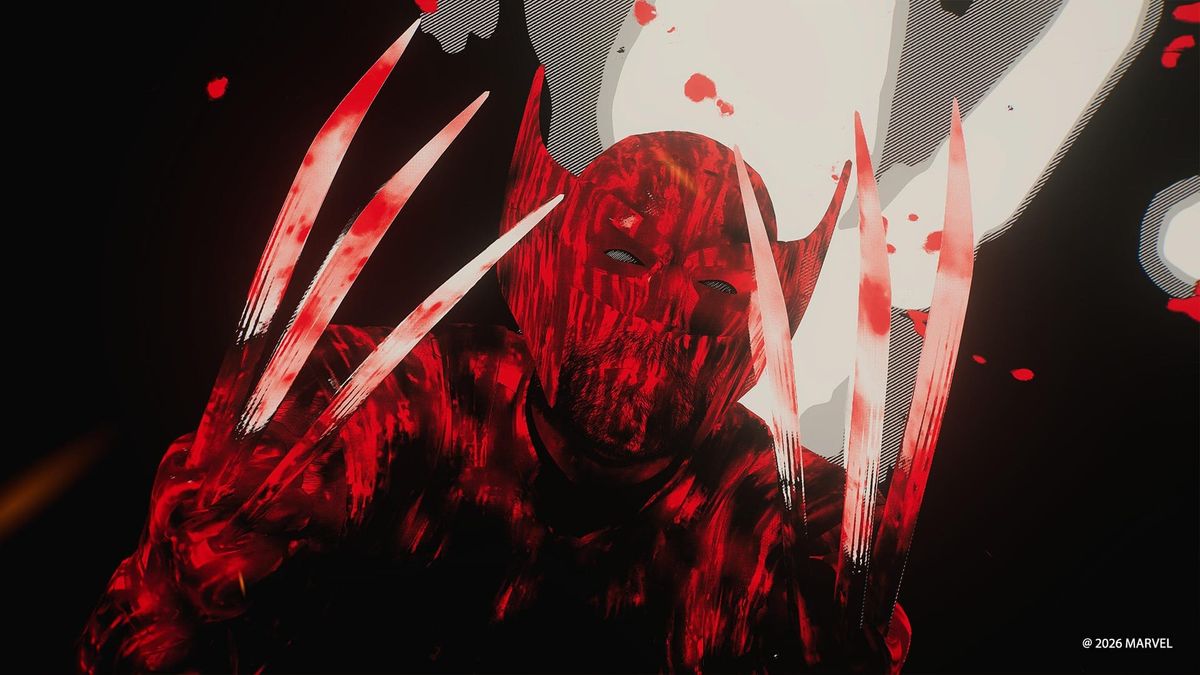
This is the question developer Insomniac Games seeks to answer in Marvel’s Wolverine. Unlike the studio’s Spider-Man games, which feel like a celebration of the web-slinger rather than a deconstruction, Wolverine is an attempt to separate Logan (here portrayed by Liam McIntyre) from the outsized reputation he has earned since his debut in 1974. To do this, Insomniac builds a world around its protagonist that barely resembles anything previously seen in comics, cartoons, or on the big screen. Gone are the X-Men, gone is Charles Xavier, gone is the Weapon X program.
But what, to Insomniac, is that elusive universal truth about Wolverine? Inevitably the answer to that question brings us to the quote that has defined the character for decades: "I’m the best at what I do, but what I do isn’t very nice." Insomniac’s version of Wolverine embodies this quote more so than perhaps any previous iteration. He is a man whose only purpose in life is to kill. What Wolverine struggles with throughout the narrative, however, is whether this intrinsic talent can be directed toward anything productive for mutant and humankind. At the game’s start we see him regrettably rejoining the employ of Team X (a mutant spec-ops team). He has not been forcibly recalled from his self-imposed isolation, an attempt at a peaceful life, but instead has chosen of his own volition to help save Nathaniel Essex, a friend in need. Wolverine does not necessarily want to do this, but he understands that it is what he was made for. This internal conflict between the distaste for enacting violence versus understanding he is ultimately a tool made for it, defines him. Insomniac has distilled decades of comic canon into the simple truth that Logan is the personification of death.
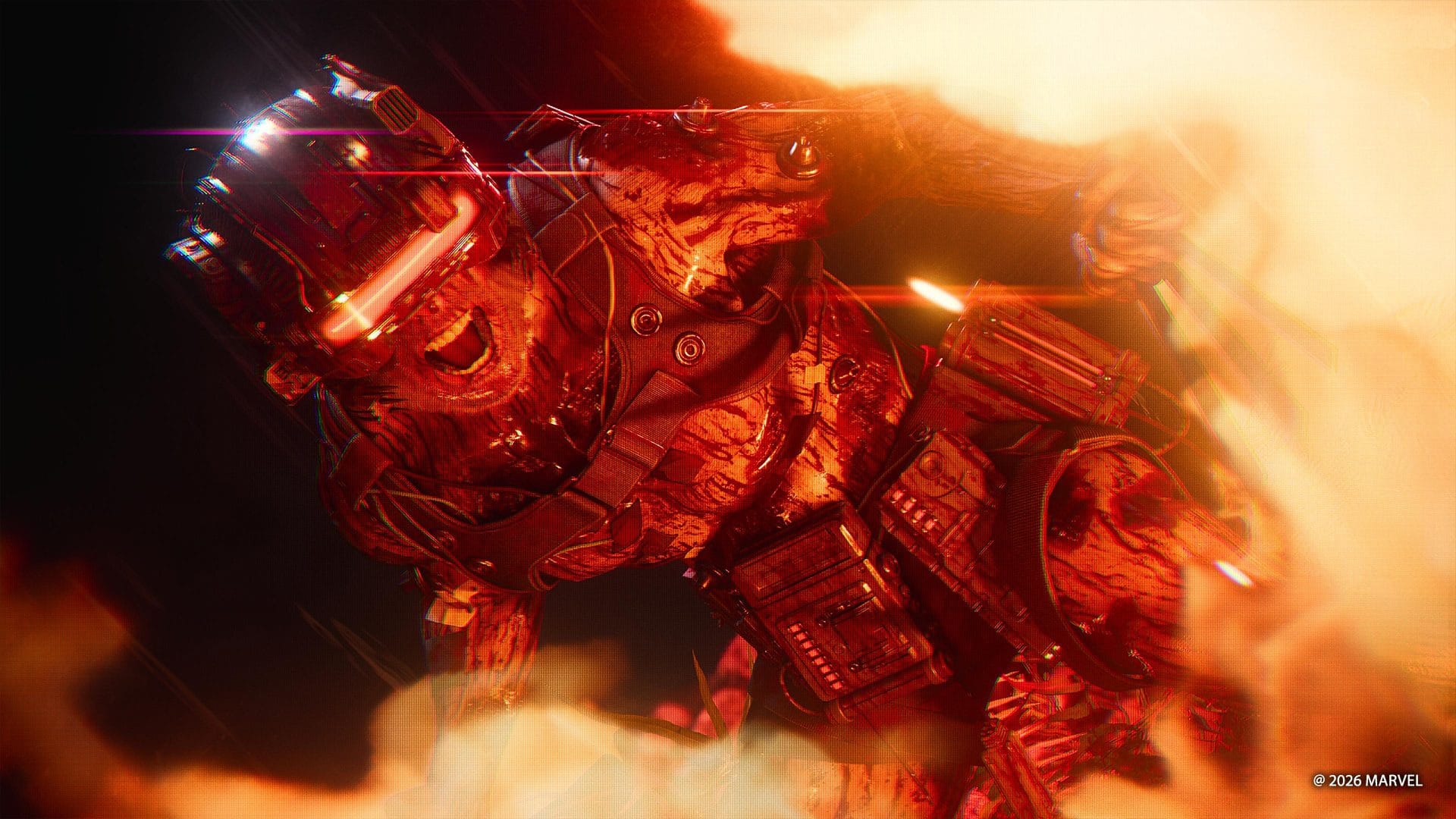
To further codify this, Insomniac rewrites Wolverine’s backstory. Rather than a lifetime of trauma leading the character to gain his Adamantium claws and lose his memories thanks to the Weapon X program, this version of the character is baptized in metal by the villain Apocalypse. It is slowly revealed over the course of the game’s narrative that Logan was formerly the Horseman of Death, an agent of violence so infamous that the Hand refer to him as Shinigami. While the choice to make Wolverine the Horseman of Death isn’t original in itself — Erik Larsen and Leinil Francis Yu did it first in their solo run on the character — Insomniac repurposes a minor piece of established canon in a way that reveals new facets of what we think we know about Logan. Though, as it turns out, this is only half of the story Insomniac is interested in.
With so few members of the X-Men present in Marvel’s Wolverine, the presence of Jean Grey (Krizia Bajos) is all the more attention-grabbing. The fiery telepath has long been one of Logan’s most popular love interests (even if real ones know Storm is his best) and she serves much the same purpose here. But just as Insomniac seeks to get to the core of what defines Logan, so too does it seek clarity with Jean.
Jean Grey, for better or worse, is most famous for dying. It’s something she does quite well and quite often. While she’s been intermittently revived over the years (she’s currently kicking right now, if you were curious) and a number of talented creative teams have sought to flesh her out beyond her role as a corpse for others to shed tears over, Insomniac cuts to the truth of the matter. Jean is defined by her relationship to death. As Logan is the personification of death, the two really are made for each other.
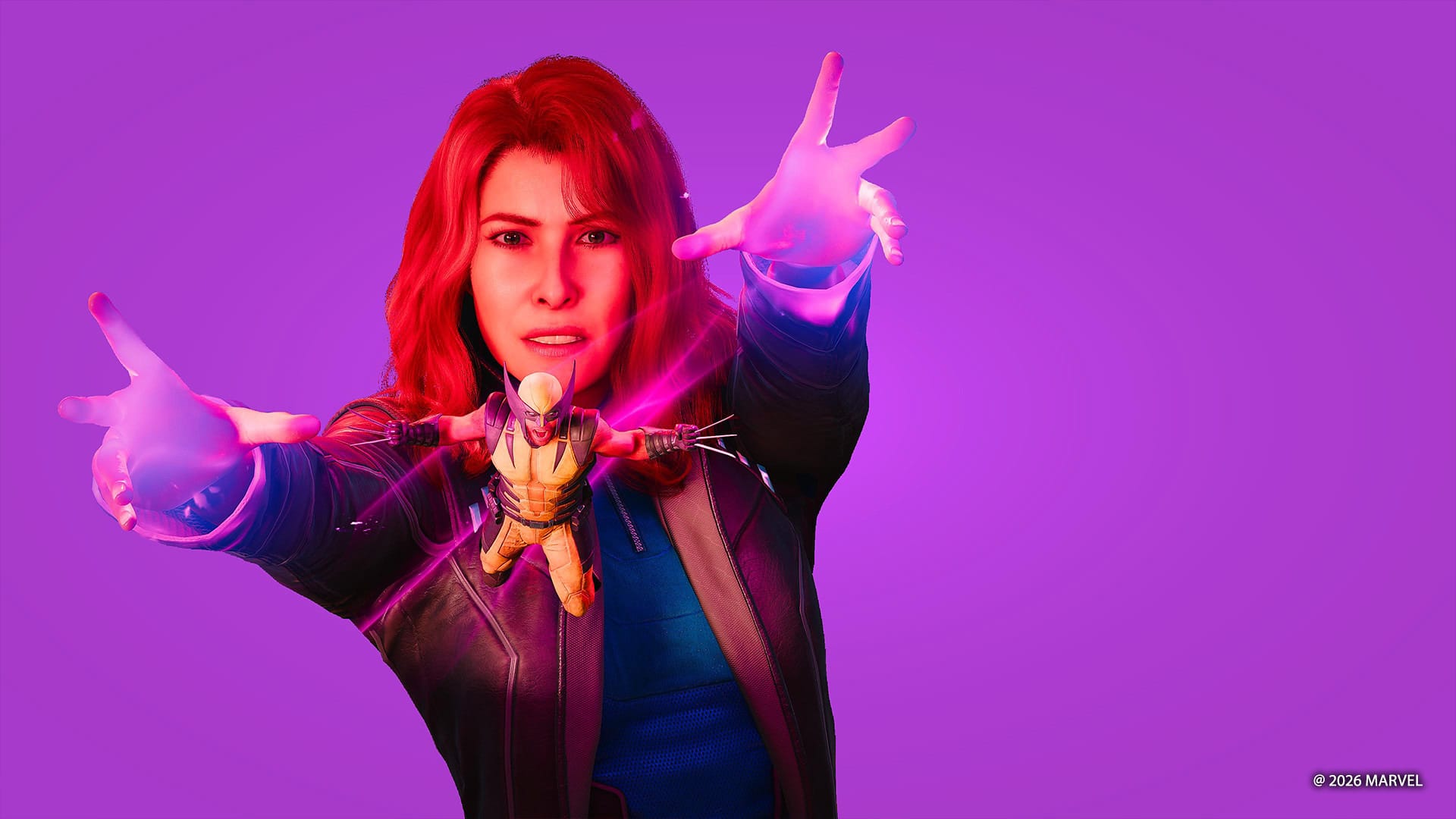
Insomniac takes Jean’s relationship with death to the extreme by revealing she exists in a continuous cycle of death and resurrection — a more literal take on the Phoenix Force. Each life begins anew with no memory of what came before, yet the game's ending heavily implies she has crossed paths with Logan (whose lifespan is unnaturally extended due to his healing abilities) in more than two lifetimes. There is a tropiness to the idea that the two might find each other in every lifetime, but the core dynamic at play feels revelatory in a way that justifies Logan and Jean’s relationship better than perhaps any other take on the characters.
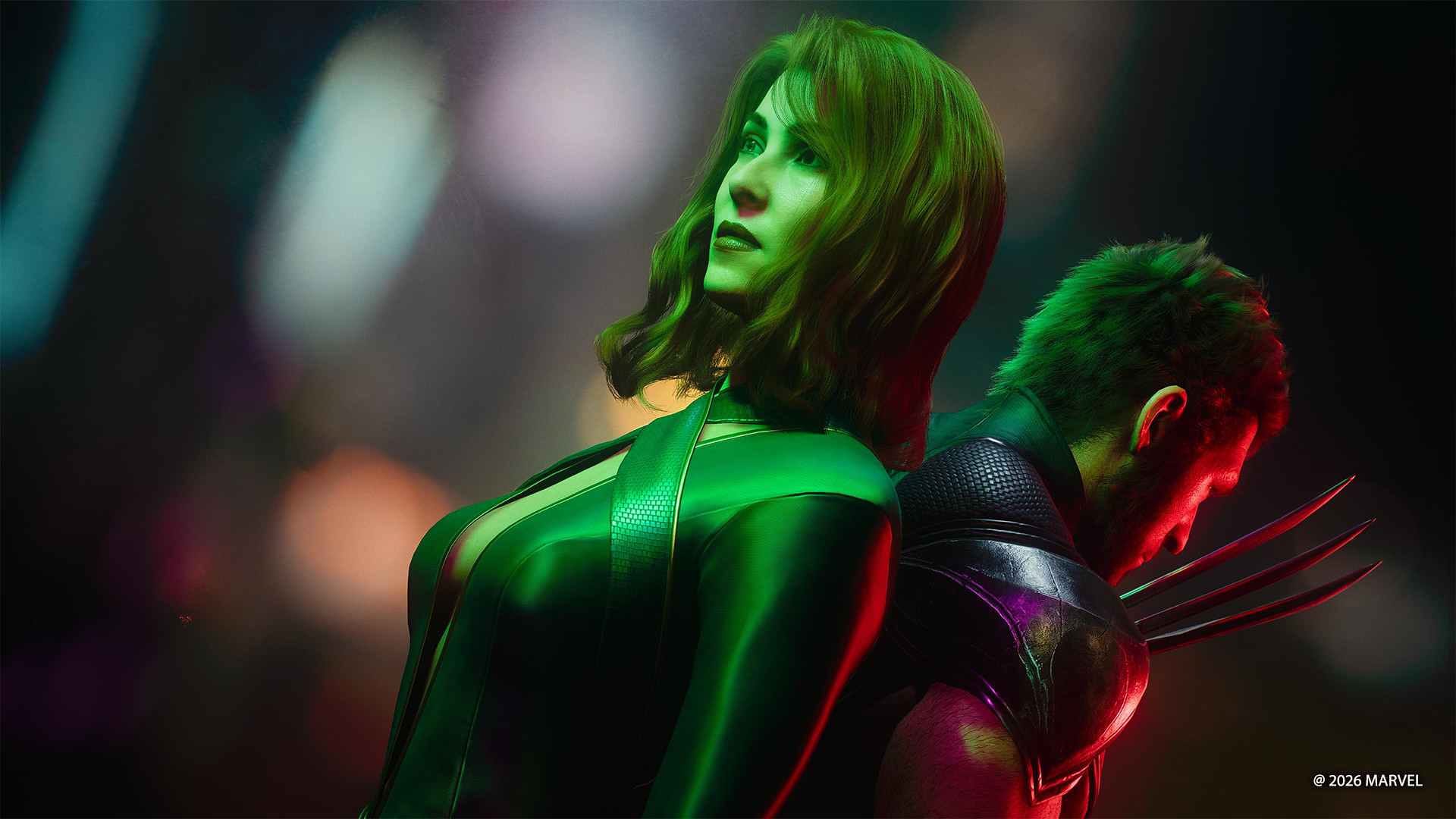
The innate love that binds the two is made even more believable thanks to the performances of McIntyre and Bajos. This was, admittedly, a surprise for me. McIntyre has the unenviable job of attempting to make Logan his own in the shadow of Cal Dodd, Steve Blum, and Hugh Jackman. Yet both actors find ways to humanize their respective characters, and it’s on display most when they play off each other. There is an undeniable chemistry the two share almost as soon as they meet that makes you believe they just can’t help but be drawn to each other across lifetimes. Bajos's Jean is self-assured from the jump and helps tease out a more melancholic side to McIntyre's Logan, which is a fitting reflection of the characters’ dynamic. Supporting performances such as Nicole Pacent's Mystique can be intermittently delightful and even I must begrudgingly give Troy Baker some credit for hamming it up as Essex.
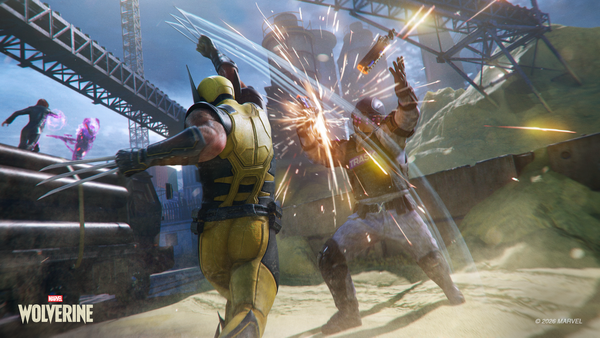
Regrettably, almost every other part of Marvel’s Wolverine can’t keep up with Insomniac’s ambition. That is obviously on display in the game’s repetitive and unoriginal combat, which threatens to put the player to sleep. Eyes glaze over at upgrade trees and skill points, the buttons continue to mash, and Wolverine continues to kill in a deluge of bloody monotony. A rage meter encourages the player to let Logan give into his base animal instincts. While it isn’t a surprise that a prestige Sony title fails to experiment with abrasive game design, it is no less disappointing that there is no real cost or consequence to playing the game in a way that feels directly opposed to its characterization of Logan. I do not think this should be a game that allows Logan the option not to kill — as established, that is what defines him — but it should never be as rewarding as the game tries to make it feel.
The narrative is equally weak, despite my belief that there is something of an original idea at the heart of it all. Logan is all but dragged from place to place with no real purpose beyond getting the game to a runtime that has been deemed worthy of its price tag. Insomniac attempts to bring moments of quiet reflection through optional combat challenges that end with short stories, but nothing has any weight or depth. For a game about visceral harm, it doesn’t deliver anything approaching a gut punch to the player.
Amid all of this failure, it’s almost fitting that Marvel’s Wolverine has its own “What If..?” story that I can’t quite ignore. A massive ransomware attack in 2023 saw extensive information on the game leaked to the public. That included, amongst other documents, a complete story synopsis. Elements of the leaked story include locations, characters, and minor plot beats, even the obscure detail Mystique would be married to extremely minor character Tyger Tiger, all of which loosely appear in the final game.
One could hypothesize that Sony and Insomniac frankensteined a new version of the game together by breaking apart what existed and stitching it together again in a different way in order to make it distinct from the leaked information, while creating as few new elements as possible. The consequences of such a decision would be scrapping the integrity of the game in fear of it being too known, valuing secrecy and surprise over storytelling. Allegedly.
Knowing how a story ends does not make the journey to that conclusion less compelling. Knowing Nathaniel Essex will betray Logan and become Mister Sinister by the game’s finale does not make that inevitable twist inherently boring. It fizzles only because Insomniac doesn’t care to deliver a satisfying reason for what devolves into a cartoonish turn to villainy.
While Sony did acknowledge the ransomware attack itself, neither it nor Insomniac has confirmed the veracity of any of the leaked information. I'm willing to bet they never will.
The great tragedy of Marvel’s Wolverine, and please hold the tomatoes, is that it hides what may be one of the most inspired takes on its iconic protagonist that we’ve ever seen. There is a clear perspective in Insomniac’s stripped-down dissection of Logan and Jean’s relationships with death and each other. Yet the studio fails to peel away the layers of uninspired AAA game design, burying anything resembling inspiration beneath it. Perhaps this was the game we were always meant to get; it could not have been different. But What If…?
Artemis here. Stop Caring is reader supported and 100% free. Please consider subscribing or making a one-time donation to make more of this possible. All donations go directly to the author of the featured piece.