Promised Yokai Agency
How Japanese Yokai meet the modern world as mascots in Promise Mascot Agency.

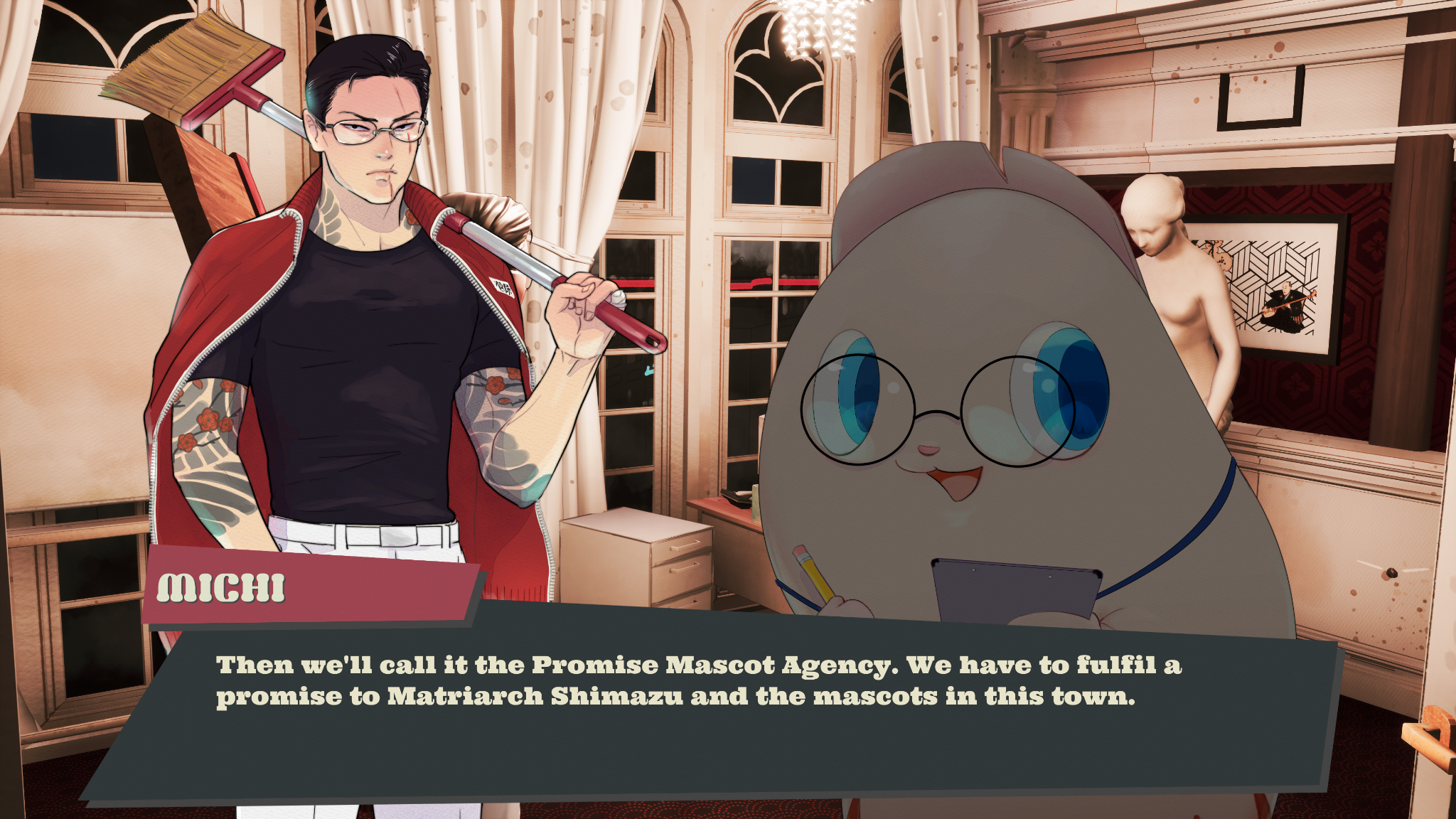
Each country has folkloric creatures - faeries, aswangs, dokkaebi, and aos sídhe. Japan has yokai. But when the creatures of yesteryear no longer scare, they must find a place in the world — they are commodified and transformed into more presentable, advertisement-friendly versions of themselves. In the modern day, yokai have survived through reinterpretation and repackaging. They are prominent in popular media as creatures of horror and mirth, used to bring a touch of the extraordinary to everyday life. But yokai are more than just spirits who go bump in the night. They represent the old ways of Japan, the place where the supernatural lives side by side with the mundane. In Promise Mascot Agency, Japan’s yokai have been reimagined as mascots. Not underpaid and heatstroke-prone humans in suits, but walking, talking, flesh and blood - or, in some cases, tofu and whipped cream - mascots.Promise Mascot Agency is set in the nearly-abandoned countryside town of Kasomachi, which serves as the playable protagonist Michi’s place of exile from his yakuza family. Kasomachi is all but a ghost town, held together by the few residents that have remained to run establishments like Tanaka Car Dream, Kasomachi High (under a single teacher), and a strawberry farm operated by a grandfather and his granddaughter. It’s reflective of a Japan that has seen increased urbanization and mass exodus from the countryside, with over 90% of the population living in populous cities like Tokyo, Osaka, or Kyoto. Opportunities are plentiful there compared to the quiet of traditional farming and rural life, even if they come with increased pressure to overwork in stressful, sometimes fatal, environments.
Japan’s mascot culture is ubiquitous, not only confined to sports teams or cereal boxes, but prevalent in the promotion of regions, tourist spots, and brands. These mascots have ranged from cute and cuddly, to menacing, to flat out confusing. In recent years, mascots and tourism campaigns based around popular culture have popped up all over Japan in order to draw attention to areas with less renown than Tokyo, like Kumamon for Kumamoto or Gunma-Chan for Gunma Prefecture. In a similar vein, Kasomachi’s mascots become intertwined with the fate of the region as a whole. As members of the titular mascot agency, they must promote anything, including a war ruin, a coffee shop, and a clothing brand, drawing attention to businesses that would otherwise be underserved or underloved.
Kasomachi serves as a fictional analogue to some of Japan’s most famous ghost towns - places where the yokai, Japan’s supernatural creatures, congregate en masse. While yokai are variable in both form and intention — from the turtle-shelled kappa to the Gashadokuro — they not only represent natural or unnatural phenomena, but human emotions. Towns like Obokeyokai Village have capitalized on the spiritualism and presence of yokai to bring tourism, awareness, and activity to areas that might fly under the radar and be forgotten. After all, to a mostly urbanized nation and a worldwide populace most familiar with Japan’s hotspots, the rest of the country can be an afterthought. Distant names and places without the same appeal. Forgotten and distant.
Among the Agency’s recruits are mascots such as To-Fu the walking talking tofu block, and Kofun the walking katashiro. Here in Kasomachi, they find a place side by side with those who have been left behind. After all, Promise Mascot Agency’s mascots are, by design, the derelicts, the retired, the pushed aside, or naively new. They do not belong in the wider world of mankind, and they are outliers and outsiders not only to mankind but even to their own kin.
Rather than representing traditional yokai, such as the turtle shelled kappa or ice lady yuki-onna, most of the mascots are animate objects and ridiculous concepts, like the pseudo-vampiric iced dessert Kaki-Gory. The exception is the Tanuki who physically lurks around Kasomachi as a series of statues, ranging from tiny, to human-sized, to gargantuan and looming in the distance. Tanuki are raccoons - shapeshifters and pranksters. The perfect mascot for an area filled with hijinks and deception. But if there is a yokai that Promise Mascot Agency’s mascots best emulate, it is the tsukumogami. These are objects that have been given form after one hundred years of existence and they often become tricksters because they’ve been discarded, neglected, or pushed to the side - just like the titular agency’s cast.
The most prominent of these mascots to the plot is Pinky, an anthropomorphic finger who serves as the manager tentatively holding the Promise Mascot Agency together before Michi arrives. She is presented as a wise-cracking, sometimes violent figure who nevertheless earns the right of electorate as the town’s mayor. Pinky is emblematic of the sacrifices the yakuza make as a form of atonement, but also the promise that Michi makes in his exile to restore some semblance of hope to the town of Kasomachi. The promise that defines the Mascot Agency, and the game as a whole.
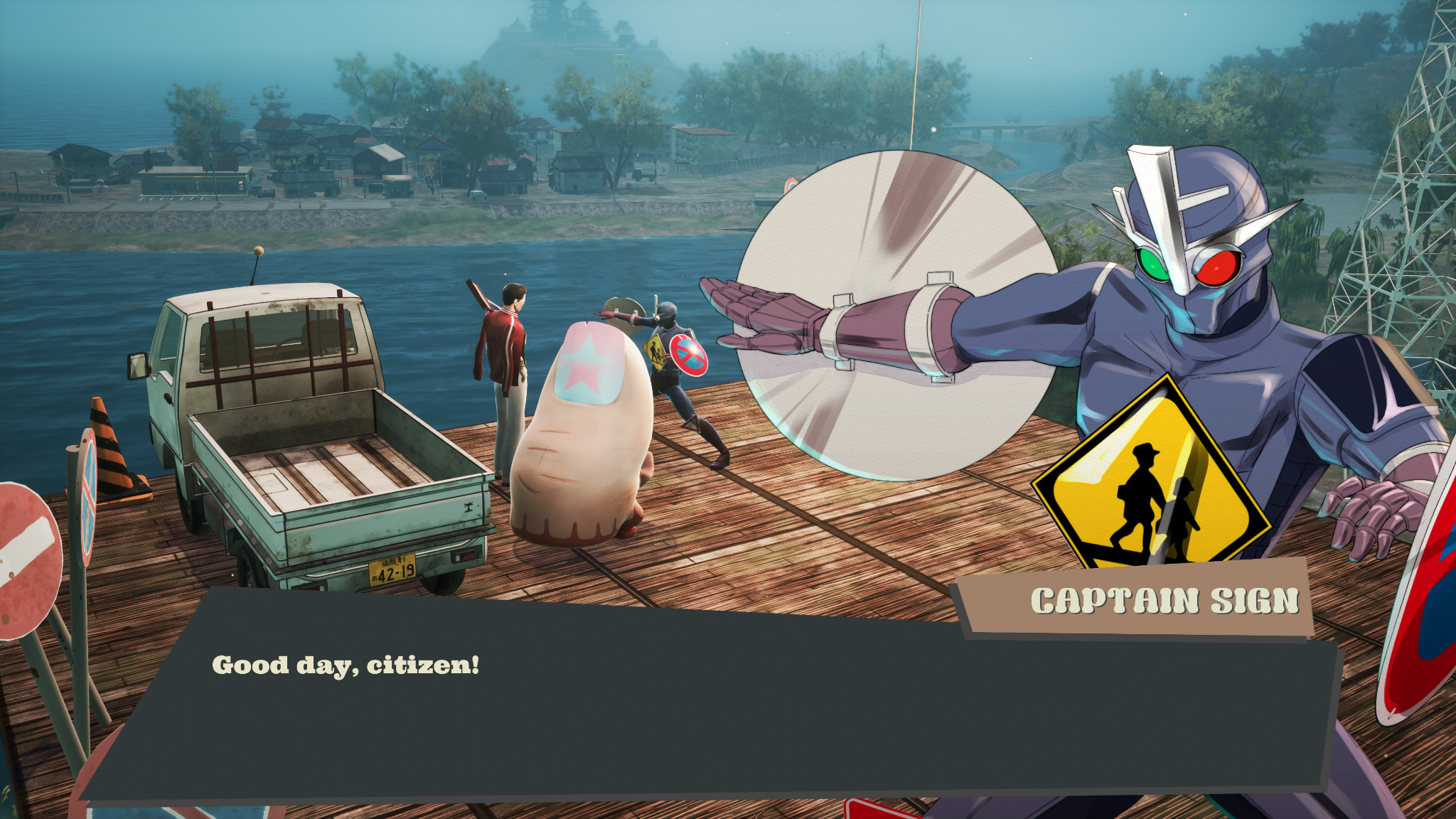
Of course, Kasomachi is incomplete without having human beings alongside the mascots. The school teacher, the browbeaten businessman, the social media savvy grandchild of the strawberry farmer, and even more notably strange residents, like faux-superhero Safety Man. Mechanically and narratively, what helps change the lives of these residents is not only the mascots who cheer them on but the initiative that these human beings take as a result of encouragement. Yokai and mankind working hand in hand so that the ghost town is not left to the dead, but gains a second chance at life.
While sometimes framed in a humorous light, the Kyushu Rejuvenation Fund’s embezzlement also reflects not only the specter of materialism, but a genuine political threat to the underdeveloped and underserved countryside town. In Kasomachi, this is money that was meant for the rehabilitation and enrichment of a dying location. A means to restore a fading place, to allow it to flourish with some dignity and kindness. Its embezzlement by its mayor, and its misappropriation by Michi’s once ally in the yakuza, only serve as a showcase of individual greed over collective welfare. Though the yokai are somewhat outside of mundane everyday life, they clash with these corrupted human interests - punishing the hubris of man and dragging sinners into the depths… or at least making sure they get sent to jail. Ultimately, the Promise Mascot Agency is to Kasomachi what Japan’s numerous yokai are to its ghost towns - strange, otherworldly beings who suffuse the town with spiritual energy. Instilling them with new life and vitality, even though they exist outside of the rational human norm. They walk side by side with mankind, these inscrutable beings, and have found a new way to survive even when the world threatens to leave them behind. And sometimes that means cheering on a failing grocery store.
Artemis here. Stop Caring is reader supported and 100% free. Please consider subscribing or making a one-time donation to make more of this possible. All donations go directly to the author of the featured piece.
Wanna give a shoutout to our newest patron: Saoirse Stone, thank you for the meal! We feast tonight in your honor.