God Won't Forgive You For Following His Will
The secularization of Dragon Quest.

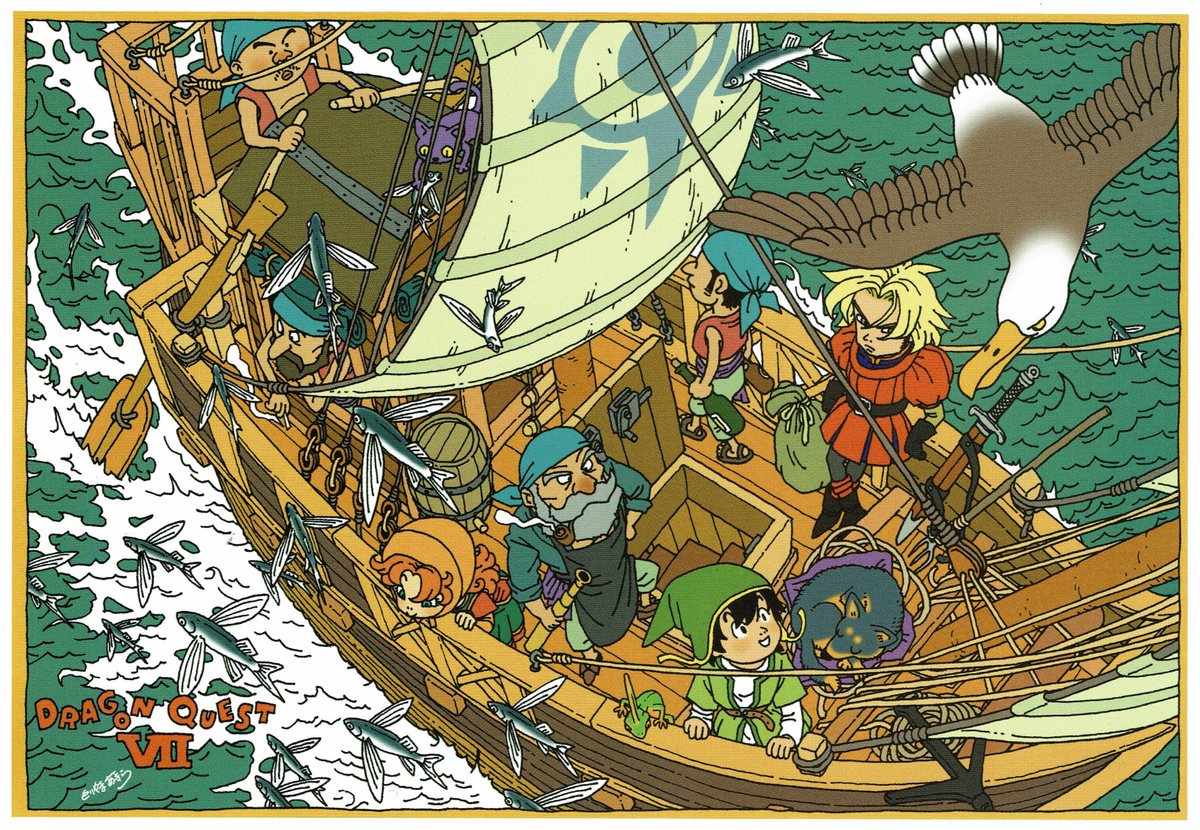
And how could God survive? They have created humanity to outlive Their usefulness, I guess, through systems and mutual aid, through the great tragedies and the amazing wonders that it has manufactured and repurposed. God will never be able to create again, as his fractalistic programming bestowed this burden to us, to everyone around everybody else, and the oceans will swallow us whole alongside all of our creations just like we did with God and Theirs.
They know it all, though, through all of time and space - They knew we would outpace them, and They knew it would kill them for that. God can’t escape Their own fate, which is probably the worst torture someone can suffer.
They did it gracefully, however.
“Now the archon who is weak has three names. The first name is Yaltabaoth, the second is Saklas, and the third is Samael. And he is impious in his arrogance which is in him. For he said, 'I am God and there is no other God beside me,' for he is ignorant of his strength, the place from which he had come.”
Apocryphon of John, Nag Hammadi Codex II
It’s interesting how, diegetically, we need the God (or the Goddess) less and less in the Dragon Quest games as they get more modern. Saving anywhere allows you to just load instead of respawning at a church with half your money (you could only save there, before). You don’t even need to remember to save now since the games autosave everywhere. Having more money (since you’re not losing half of it every time you die) means that you can buy more antidotes - you would need to be cured at a church otherwise. It’s also possible to see how long it will take to get to the next level just from the menu. You had to ask the priest to tell you before. Resurrecting is also easier and easier. You guessed it - had to be done at a church.
“Quality of life” mechanics are secularization.
I don’t mean it in a bad way, nor a good one. It’s just how things evolve. The characters still show respect towards the Goddess in modern Dragon Quest games, but then they imply that it’s out of choice and not necessity. They don’t need the Goddess to live, or to save money, or to be healthy anymore - they do it because there are statues of her everywhere, and their parents used to worship her, and maybe because they think she’s pretty, or that their town has not been ravaged by monsters because of her image.
It is even more relevant. Not loving something out of necessity, but out of culture and will, I mean. Faith takes a lot of different shapes around the world, but it's consistently blind. You need to feel, to listen, and to believe. If you have proof, it's not faith anymore.
This is why said secularization makes it consistently stronger. It's not your fate or your only choice anymore: it's what you want. And when you get what you want, you need to go deeper and deeper, as it's an active way of learning and not just how you live life. It's based on actions and the exploitation of your own time.
To love purely is to consent to distance, it is to adore the distance between ourselves and that which we love.
Simone Weil, Gravity and Grace (1947)
If Dragon Quest has, over time, secularized itself through mechanics, then Dragon Quest VII accomplishes a different kind of disenchantment entirely: ontology. It secularizes the architecture of the world, revealing a cosmos in which acting in God’s name atomizes creation instead of redeeming it, scatters it into broken continents and isolated histories, like shards of scripture manifesting as geography - with its lessons and metaphors, everything that scripture is supposed to convey.
We don’t know how the world came to be, but we understand pretty early on that we need to unravel it to understand it. There are stone tablets out there and they depict islands - whenever we complete the picture of an island, we travel back in time to solve a problem on it, and then it reappears in the present time. Every island shows us a little bit of the world mythos (the scripture comparison) and said world mythos shows us that people are constantly trying to revive the Almighty - the Creator. They don’t know why said Creator bestowed the island curse upon them. They just trust that He had his reasons.
Dragon Quest VII feels, in many ways, kind of a deconstruction of Dragon Quest. This notion may seem silly nowadays because the game sits closer to its origins than it does with the current state of the series, and it’s not something widely regarded as such. It also doesn’t taste bitter: it’s not a critique of Dragon Quest, or Yuji Horii’s previous beliefs, per se. Just a game that toys with certain expectations of the series, playfully. You get in wells and there’s usually nothing there. The world map is outrageously large but there’s only one island. Your main companions are people that do not exist to praise you, they are boastful, annoying, funny. You only find out that it has a class-based progression system 30 hours in, and then again 5 hours after that, because it was actually a trap that leads you to the hardest dungeons of the main game.
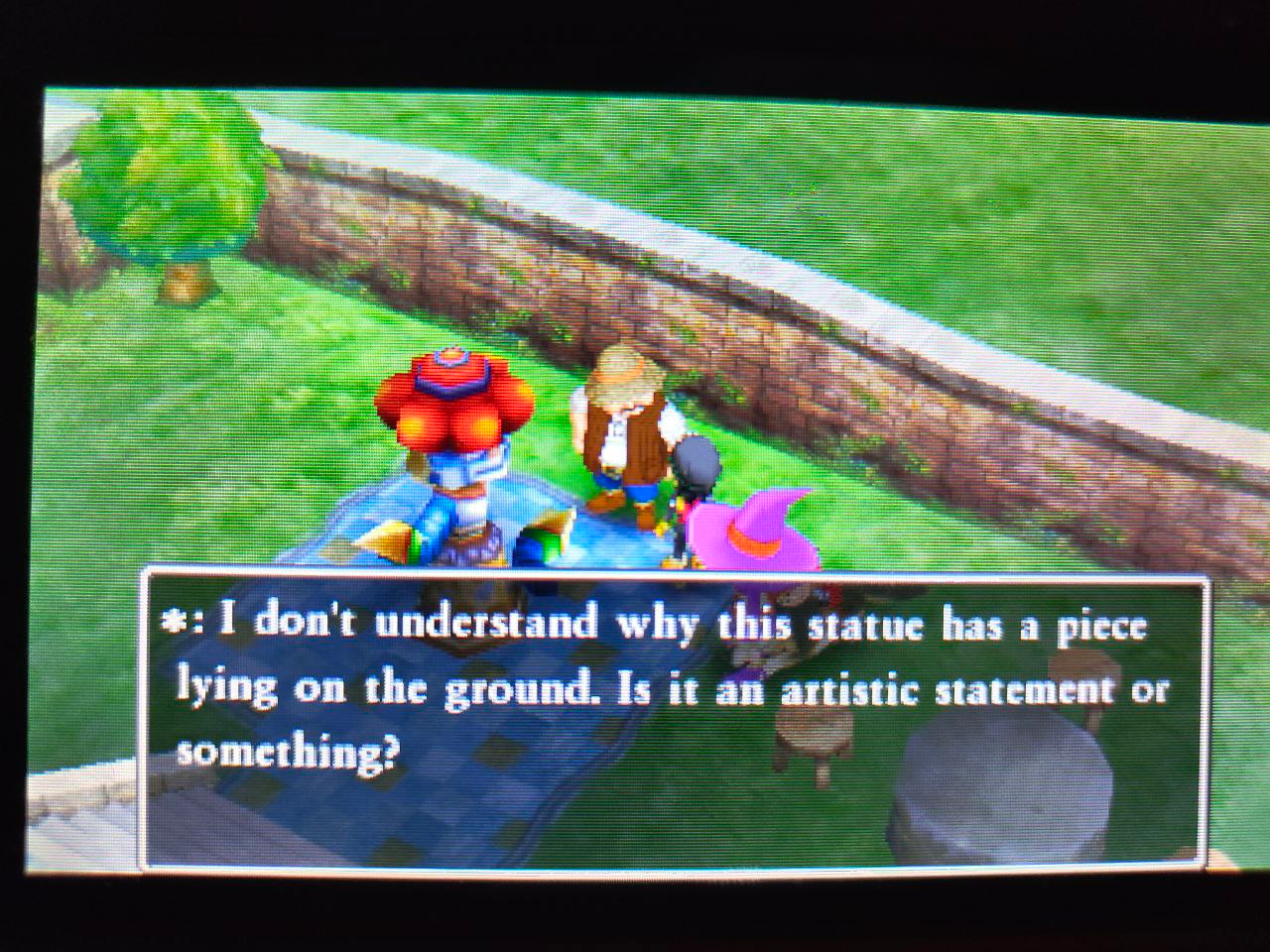
After postmodernism became a thing (most likely due to the academic teachings about it through the lens of critical theory from the School of Frankfurt, as Marxism became less of a practical reading of the world and more of a theoretical thought-process, losing its praxis due to the world itself becoming more and more money-led), it’s as easy to say something is a deconstruction as it is to disregard a deconstruction as just lazy commentary, especially in anti-intellectual or conservative spaces. People believe in meritocracy and, therefore, a piece harpooning another “bigger”/”more important” piece is just trying to ride on its success without the effort that the first one took to arrive at its goals. Every deconstruction is a parody. Every parody is making fun of what I believe in. Kill them all, etc.
Of course, Gnosticism came before the School of Frankfurt, although it can be read as a “deconstruction” of Christianity, through modern lens. It uses Christianity as a basis and shows that Actually, More Things Were Happening And They Don’t Want You To Know About It. This is why the apocrypha were censored and uncanonized after the Council of Nicaea decided what is Truly Christian. There were numerous books - with debatable origin dates - that were talking about the structure of Heaven, about other teachings of Jesus Christ, and more importantly, about the true nature of the universe.
In very simple terms, Sophia is Wisdom, a divine principle that creates basically by instinct. She ends up creating the Demiurge, a being that grows up in secrecy, and in that secrecy, limits his own worldview. He, then, creates the Universe using that same limitation - the world only exists as far as you see it - he doesn’t understand anything beyond his own horizons, and therefore the universe is imperfect. It was created by his arrogance and reflects it. The Demiurge is the limit of empiricism. He cannot touch the Pleroma - the fullness of existence, where Divinity lives, and where there are no cognitive boundaries - because he doesn’t know it exists. He just knows what he sees, and touches, and creates.
This is why the universe is not perfect. This is why there is suffering. This is why the God of the Old Testament is cruel, and jealous: he is actually the Demiurge, not the actual, true God. Jesus Christ wanted us to achieve Gnosis - knowledge - and to break free from this flawed existence - through personal improvement and the search for wisdom, not through the Church or other people telling you what you should believe.
“Jesus said, ‘If you bring forth what is within you, what you have will save you.
If you do not bring forth what is within you, what you do not have will kill you.’”
Gospel of Thomas, Logion 70, Nag Hammadi Codex II
It’s very fitting, then, that Dragon Quest VII, aside from being a deconstruction of its own series, is also deeply Gnostic in how it treats divinity and structure, even at a surface level. The islands exist only within themselves, sealed into solitary histories, and through our intervention they ascend into the greater world, the Whole, acquiring meaning that extends beyond their territory. Our role is to return every fragment to the true universe so we can interpret the scattered parts as one system, fulfilling the narrative’s underlying imperative: to resurrect the Almighty.
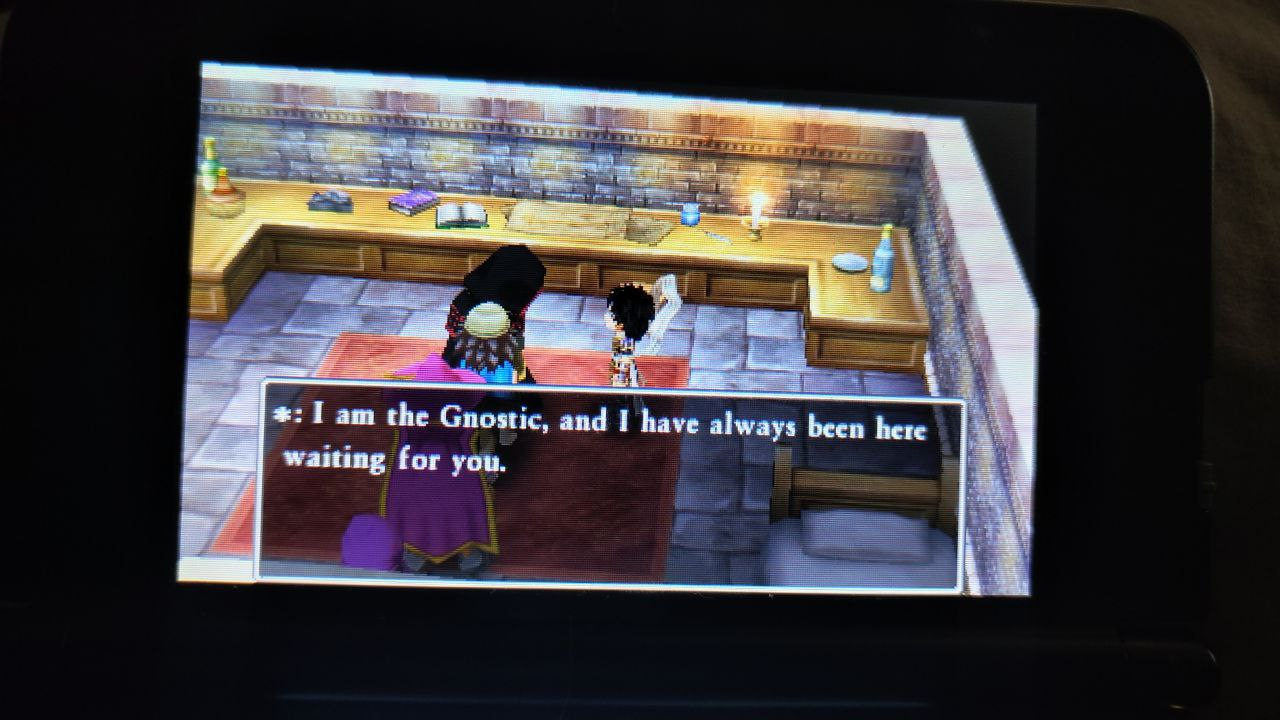
Gnosticism wasn’t anything new to Japanese media. The whole “teenagers killing god” meme comes from the western ignorance regarding the general thematic relevance of how religion plays a role in society and the dynamics between mythology and liturgy. It’s easier to apply humorous heuristics to something you might consider a mockery (or to just be racist!) than it is to understand that the universality of any kind of view, religion included, is, most likely, manufactured.
In Ways of Thinking of Eastern Peoples (1964), Hajime Nakamura implies that Japanese religious imagination historically favors cosmic order as a constructed framework instead of a revealed framework. He also says that Japanese religious thought tends toward concrete, context-bound, hierarchical, immanent frameworks of meaning, grounded in direct experience. Religion, spirits, miracles, everything is manifested in reality itself. Since “Buddhism and Confucianism were simultaneously introduced, without theoretical conflicts in the minds of the Japanese.” (p. 412), it's understandable how Gnosticism would be an interesting way of seeing Christianity by Japanese people. It implies divinity with human-like qualities, it creates a mythology that is architectural, a two-way street of creation and being created by its creation, using human-like narrative structures for its pantheon.
And after 50 or so hours or so of rebuilding the world and acting on liturgy and rite, in Dragon Quest VII, you resurrect the Almighty. The Almighty is a demiurge. He's actually Orgodemir, a big demon, disguising himself as the Almighty so he could be resurrected.
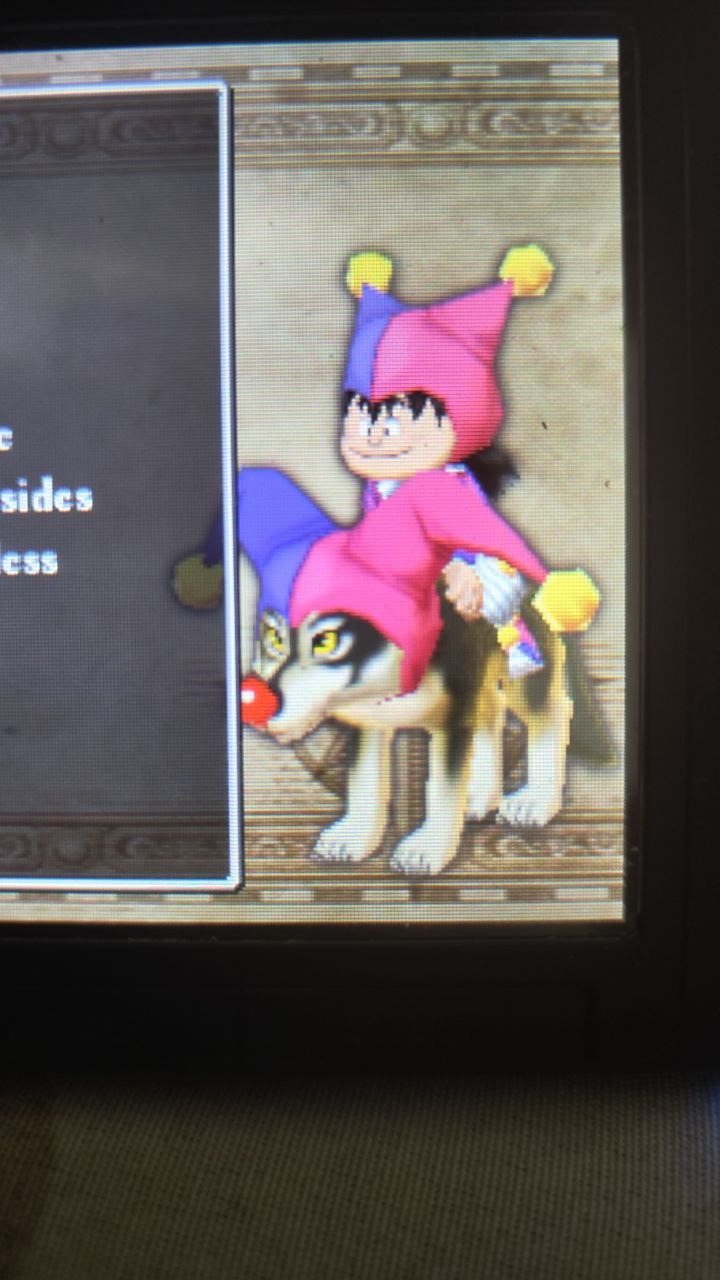
He's resurrected by myth - you need to find human-created instruments to play and dance a human-created dance to bring him back. He needs human intervention to exist, as the demiurge cannot see anything beyond what already exists in front of himself, kicking off the game's last act: to defeat him. And to do it, you need to find the four elemental spirits. The spirits are beyond-human. They have always existed beyond our own visage, controlling nature. As humans, we could only see their material manifestations (wind howling, fire burning, etc.) and not themselves, oblivious to the fact that they actually Exist.
This is where we understand that the world resides beyond what is palpable and that divinity manifests itself through secondary means. We need to gain knowledge by retreading our steps (going through islands again to reach true strength), coming from Gnosis (the human understanding of divine manifestation), to defeat Orgodemir. The true Almighty himself is a superboss, a very cute depiction of the Christian God, but he doesn't really intervene within the story. He exists beyond your PS1 or your 3DS (or whatever platforms the new DQ7 is going to be released on).
The thing is that Orgodemir is bound to his own limits. He doesn't know of those things that exist beyond himself and his own plans. He thinks that everything is accounted for, but of course it's not! What about the spirits? What about the Almighty? What about humans gaining more knowledge than him?
It was deterministic, of course. The real Almighty might have known all along what would happen. He knew about Orgodemir's facade, He knew about the spirits, and he let it happen. His plan goes beyond our own understanding, but as Simone Weil said, this is where faith resides. The characters of Dragon Quest VII only trusted Orgodemir because they thought they were trusting the Almighty and, therefore, had faith in the true God. The plan exists in a metaphysical space not reachable by us, or by Orgodemir. Are the rites just jests?
We are not sinning when we make honest mistakes.
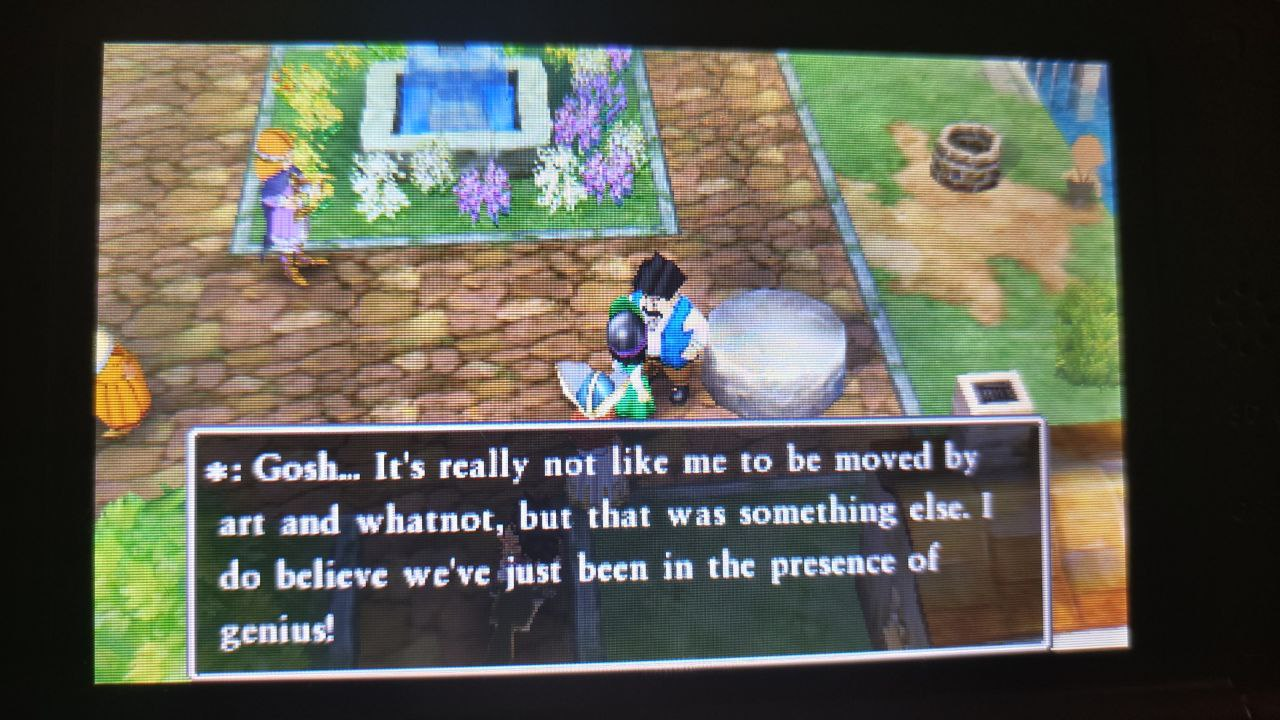
By following Orgodemir's will, we kill him. We go beyond him and we reach someone, or something, that exists beyond us. Reaching the Pleroma is impossible without existing within limits that were imposed upon us by the Pleroma itself, an eternal spiral of trust and deception. Dragon Quest VII shows that by deconstructing concepts, we can just reach deeper meanings within them. Thought exercises, like real exercises, need to destroy its synapses to reach new ones, within the same framework that is presented to us.
We have to love God through evil as such: to love God through the evil we hate, while hating this evil: to love God as the author of the evil which we are actually hating.”
Simone Weil, Gravity and Grace (1947)
And beyond the text itself, we had to understand that the divinity within the game had to secularize its mechanics. It's something that will keep happening: as new games and remakes and remasters and reimaginings exist, things are going to be smoothed out for new audiences, new attention spans, new faiths.
There are things other than the divine nowadays.
Faith is now bigger than its immanentizing statuses. We have faith in each other, in our idols, in our art, in the understanding of others, in our own brains, in the algorithm. God taught us to see faith in everything else, even things beyond our own understanding, because we trust that someone else has that understanding - it just resides, maybe, in another island, or another time.
And through that, he doesn't need to exist anymore.
The lack of the systematic necessity to exist allows Him to exist by will. He does not vanish because people don't need him, he retires into aesthetic distance, into the menu screens, into the force needed to rush to His encounter instead of fearing the myth. The world continues. As pangaea creates more and more distance between some continents, it bridges the gap between others.
Stop Caring is reader supported and 100% free. Please consider subscribing or making a one-time donation to make more of this possible. All donations on this article go directly to the author.
Huge shoutout to our two new paid subscribers:
Robin Babb: thanks for the coffee!
Maddy Myers: my deepest gratitude for the meal. We will feast tonight, in your name.