A Vivisection of Battlefield 6
Battlefield 6 has arguably saved the franchise. But at what cost?
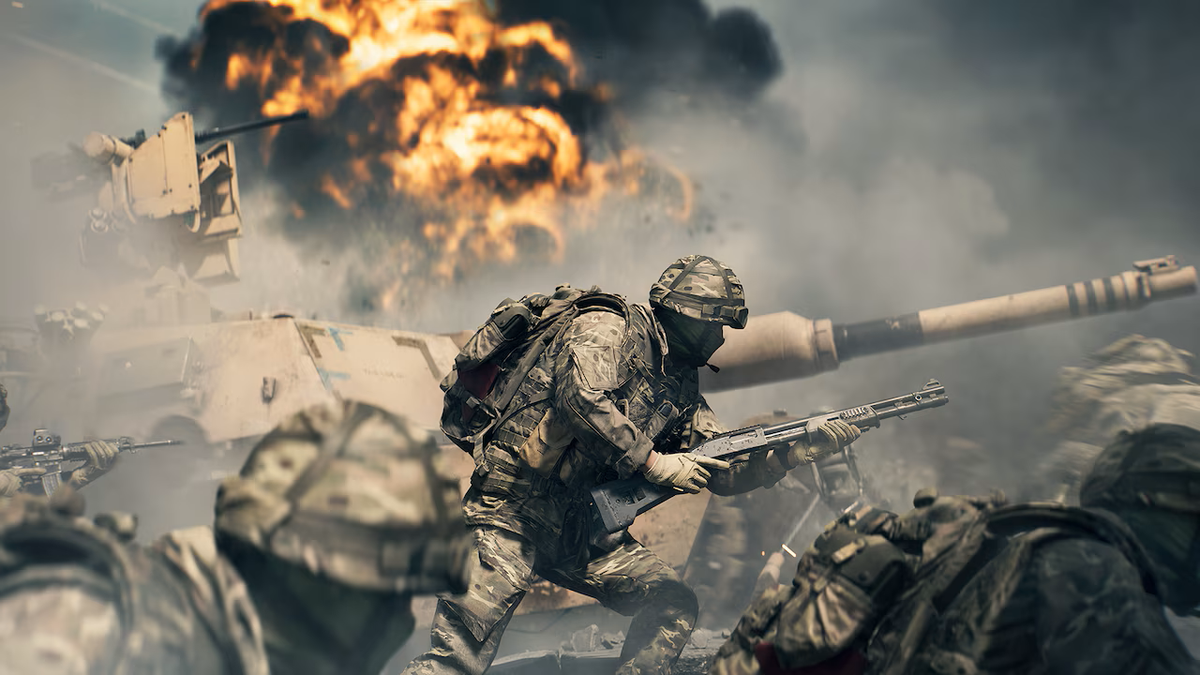
Battlefield 6 had an opportunity to depict the changes in how war is waged since the last entry in the franchise featuring a modern setting, which came out more than a decade ago. The series’ unique approach to the military shooter genre, with a focus on combined arms and taking territory, has given it a reputation for being a grounded alternative to the increasingly fantastical direction Call of Duty has gone. However, the opportunity and the franchise’s reputation have been squandered alike, as Battlefield 6 seems uninterested in representing what today’s warfare looks like. Instead, DICE opted to build a game which is actually a nostalgic, sanitized look back to the Global War on Terror. The result is a product which stakes a claim on reality but delivers fantasy. The promise of all “modern warfare shooters” is to let us get close to the hot stove of terror and annihilation, without letting us feel the actual burn. In Battlefield 6, the stove is in another house entirely.
“Our intention is to stay authentic,” lead designer Damien Kieken told IGN Nordic last year. “We’re launching with the tone of Battlefield 3 and 4. Serious. Military. No crazy nonsense.” There’s good reason for Kieken to cite those two entries beyond their perceived military seriousness. The franchise has had back-to-back failures over the past decade, as Battlefield V missed sales expectations by 1 million units, and Battlefield 2042 came short of EA’s projections by $100M. Battlefield 6 has been a success; it sold 7 million units in its first three days and has remained in the Top 10 for units sold year-to-date and players on Steam according to Circana. It was the top-selling game of 2025, beating out Call of Duty: Black Ops 6 and 7, though Black Ops 7 has continued on to sell more strongly through the first half of 2026. However, this success was not predicated on the game hewing to its authentic, serious, military roots. Battlefield 6 has sought to trade in on the cachet of its forebears without actually executing on these ambitions.
Battlefield 6 cannot “stay authentic” because it does not engage with the radically shifting craft of war, which today is ever more defined by indirect fire, precision guided munitions, drones, and cyberwarfare. Contemporaneous conflicts like the Russo-Ukrainian War and the American-Iranian War have demonstrated the importance of indirect fire. Russia and Ukraine fire thousands of artillery rounds per day, which are responsible for the majority of casualties. There are approximately 10,000 drones launched every day of the war, mostly small first-person-view (FPV) drones that can hunt and kill through cover. In the absence of meaningful commitment of ground troops, the war with Iran has been characterized by an exchange of long-range missiles and drones. Battlefield is mostly an infantry-focused game, but its differentiation from other entries in the genre is predicated on “combined arms.” Yet, it is chronically disinterested in how that term is changing, instead trotting out the usual stable of tanks, planes, and helicopters.
The American military has relied on precision guided munitions (PGMs) since the 1970s, first as a way to gain a conventional advantage over a nuclearized Russia and China as a cornerstone of its Second Offset Strategy. PGMs then became a favored method to eliminate insurgents during the Global War on Terror (GWOT). A number of developments have since eroded the American advantage in PGMs. Russia and China have each developed and stockpiled their own PGMs. Russia has also invested in jamming American PGMs, as seen in the Ukrainian conflict. Drones such as the Iranian Shahed-136 and its Russian Geran-2 clone have provided a less expensive way to overwhelm anti-missile defenses as part of long-range attacks. Ukraine has utilized FPV drones en masse to shore up its artillery deficiency. Non-state actors such as the Houthis have deployed drones in the Yemeni civil war and to restrict shipping in the Red Sea. The sum of these developments has been the erosion of America’s previous edge as guidance technology has become cheaper and more broadly available. Looking to remedy this shortfall, American military thinkers now seek a Third Offset Strategy which further integrates data- and machine-driven decision-making as a cornerstone of its next advantage.
Ironically, the Battlefield series has sometimes predicted the future of warfare, but then seems to become allergic to those same technologies once they’re widely adopted. Battlefield 4 featured the UCAV combat drone, and 2142 imagined combat hacking, but Battlefield 6 lacks an analogue for either. A Recon player can put C4 on their quadcopter to create a very short range attack drone, but this is insufficient to depict the way mass-produced drones have allowed cheap access to precision guided munitions. Other times, Battlefield 6 appears to be obsessed with recreating the past. The campaign mission “Operation Ember Strike” tasks the player with destroying surface-to-air missile sites behind enemy lines, in a reflection of the 2003 invasion of Iraq’s special operations missions to disable Iraqi radar sites and Scud launchers. The mission featured the game’s only armed drone (with infinite bombs, to boot) until it was added to the free Redsec battle royale add-on. However, this drone remains absent from modes like Conquest or Breakthrough, which comprise the series’ core.
On one hand, the autonomous warfare landscape — an extension of precision-focused doctrine — is shifting so rapidly that game development’s multi-year cycle couldn’t hope to keep up. Additionally, as machine learning allows drones to auto-guide themselves to targets, human agency moves up the chain from tactical to strategic, and that doesn’t equate to mass market success for a squad-based shooter. On the other hand, Battlefield’s appeal is supposedly predicated on representing exactly these changes. Some of these developments have been in play for long enough that they could have been interestingly portrayed, even as backdrops. A map strewn with fiber-optic wire from FPV drones could be a haunting nod toward anti-jamming techniques that have existed since 2024. The campaign’s amphibious assault on Gibraltar could have showcased the “hellscape” autonomous defense doctrine, public discourse on which has existed since 2024. The Defense Autonomous Warfare Group’s proposed $54.6B budget is a telling 241 times increase from this year. Battlefield has released three seasons’ worth of new content, providing ample opportunity to acknowledge any of this. The absence of any such portrayal indicates DICE’s true priorities. Like war itself, changes in warfare are inherently political, and the utter lack of autonomous weapons is symptomatic of Battlefield 6’s broader recalcitrance to muddy its clean warfare with politics.
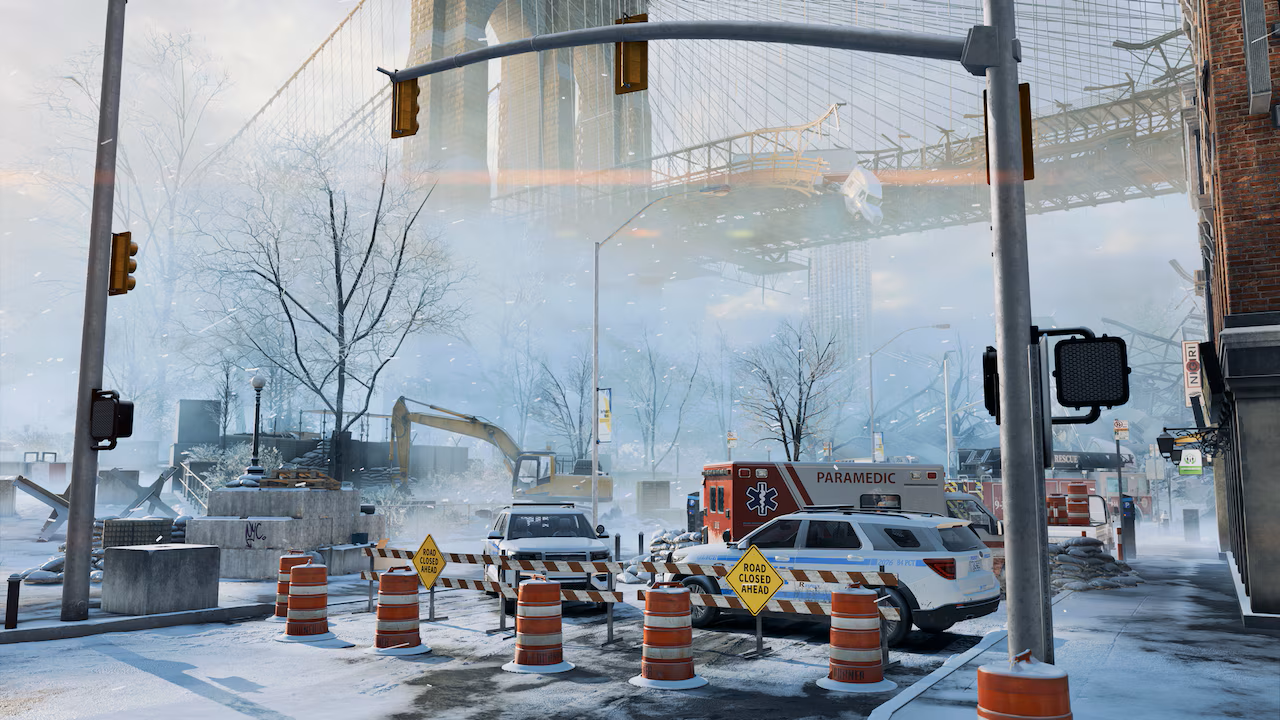
Battlefield 6 doesn’t engage with these developments because that would require confronting the slow concert of systems that is gradually bringing about the end of American dominance. These shifts are politically charged, and Battlefield 6 is committed to providing an apolitical, easily consumable version of war. It is narratively easier to have fictional paramilitary company Pax Armata stage a surprise attack, displacing anxiety about the end of American supremacy onto a spectacular attack reminiscent of 9/11. In the campaign mission “No Sleep,” Master Sergeant Carter says, “‘Never again’ — that means ‘not on our watch,’ got it?” Minutes later we blow up the Manhattan Bridge to save its more venerable cousin.
An attempt to depict war without politics is inherently unserious. War is definitionally the “continuation of policy by other means,” and to do otherwise is to ask us to turn away from the uncomfortable realities that lead to war. Battlefield 6 attempts to occupy a virtuous moral centrism that is sanitized of any politics and yet cannot help but exhume the symbolism of the GWOT in its narrative. Antagonist Pax Armata provides an al-Qaeda-like entity that launches a surprise attack on America, but armed with tanks and helicopters so the multiplayer matches are balanced. America is recast as the invaded instead of the invader, providing a clear conscience for justified war. Sympathy for invaded nations, as an enlightened reflection on the cruelties of the GWOT, is thus also redirected inward. Mujahideen are traded for Californian preppers in the self-evident morality of an American insurgency. The result is what Autumn Wright calls “a symmetrical war on terror,” which has the visual trappings of a modern conflict but the clarity of enemy and purpose of the Last Good War mythos of World War 2. Battlefield 6 exhorts us to accept the surface level and not dig deeper, for we must have a shallow understanding of war to have the delight of violence.
Battlefield 6’s central conflict evokes a fairer, clearer version of the GWOT in an apparent nostalgia for a time barely passed. It is already being reframed as a more palatable foil to the complexity of today’s conflicts, and depoliticizing the imagery of the GWOT makes it more easily packaged for mass consumption. Previous Battlefield games conjured conflicts with a near-peer rival like Russia or China, but Battlefield 6 demures from naming names out of a dual desire. One, to present combat as an apolitical mirror image of the real world but that is vacuum-insulated from it. Two, to depict a fantasy of player agency, which is incompatible with what war between states looks like in the current day.
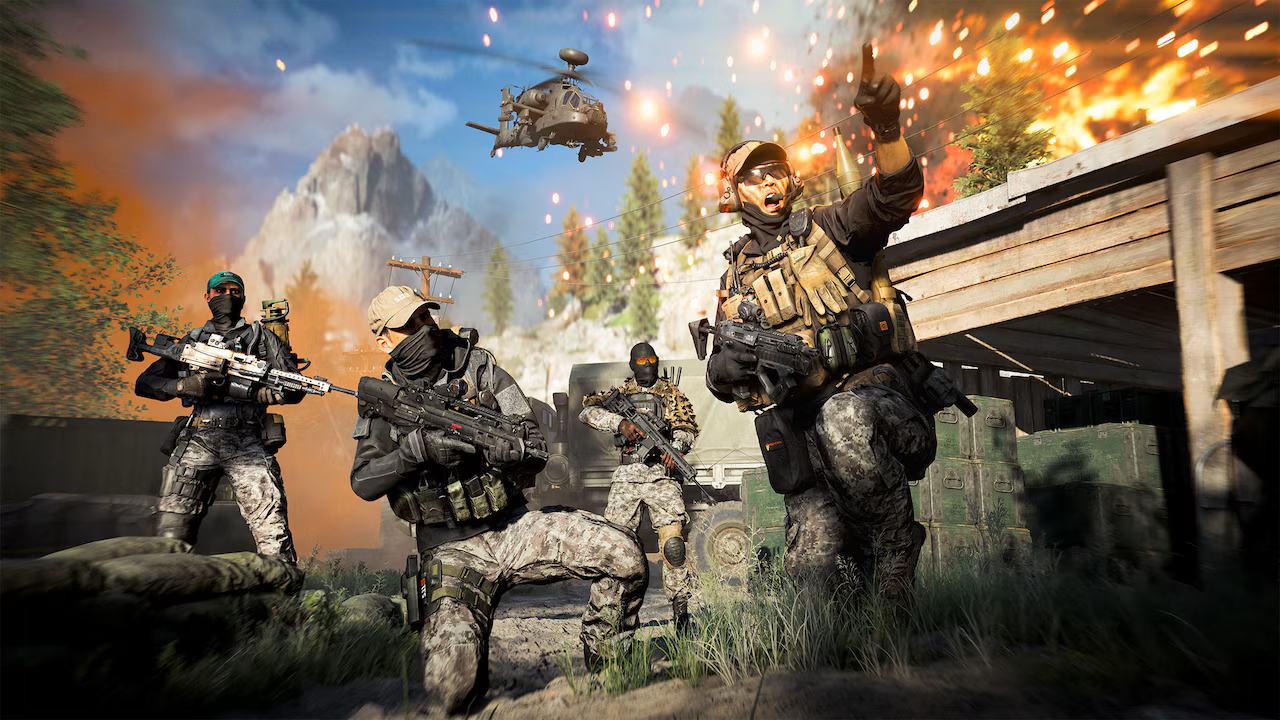
Battlefield 6 relies on players feeling agency because its engagement model runs on it. This runs counter to the actual military experience, “months of intolerable boredom interspersed with moments of agonizing fear,” as the old saying goes. There is something absurd about Kieken’s claim that Battlefield 6 would be “military” in tone. He means “realistic.” Games like Battlefield 6 claim realism in their fidelity to moments of excitement, but are loath to engage with the rest of the military experience. It’s not hard to see why: it’s not monetizable and lacks mass appeal. Campaign protagonists are invariably special operators, or adjacent, because they do not wait around in foxholes — they go out and do things with great latitude. In the public imagination, anyway. The genre glorifies the dynamic and neglects the static. The reality is that whether in a bivouac in Ukraine or on a base in Kuwait, death can seek you out without retaliation. This was true even in the GWOT, as American soldiers in forward operating bases were bombarded by insurgent mortars, and American forces responded in kind with guided bombs and missiles. Battlefield will never be able to provide a “true” military experience, because that is anathema to the sense of power that it seeks to generate. In Battlefield 6, I can almost always attack or evade whatever is attacking me regardless of what class I am playing. Small map sizes force most firefights to be at extreme close quarters and keep the action constant. I rarely have to dig in — continuous movement is ideal. The player experience remains slick, clean, frictionless. I am shepherded effortlessly to the next respawn, next match, next unlock, next microtransaction.
Billed as an authentic, serious, military shooter, Battlefield 6 delivers only in half-measures. It promises modern warfare but lacks the weapons systems of modernity. It presents war without politics. It provides the excitement of war without the pauses. These castoffs might be less enticing to the average player, but what remains loses meaning without them. The game feels hollowed out as a result, the empty space filled with battle passes and battle royales that don’t connect to the series. This is important to me but I sense from the game’s commercial success it is not important to most. I am an inconsequential demographic: someone who appreciates military realism but isn’t yet ready to dedicate time to any of the milsim games that commit to depicting the reality of modern warfare. A plethora of such games has filled the gap that Battlefield has left for the past decade, but it has also fractured the playerbase. Battlefield 6 was big enough that for a time my friends stopped playing Post Scriptum and Arma and War Thunder and — in the case of the real sickos — Call to Arms - Gates of Hell: Ostfront. It did not keep our interest for long. Based on its commercial success, I am sure the next Battlefield will seek to emulate 6 as the series ossifies into the same reboot cycle that has proven so lucrative for Activision Blizzard with Call of Duty.
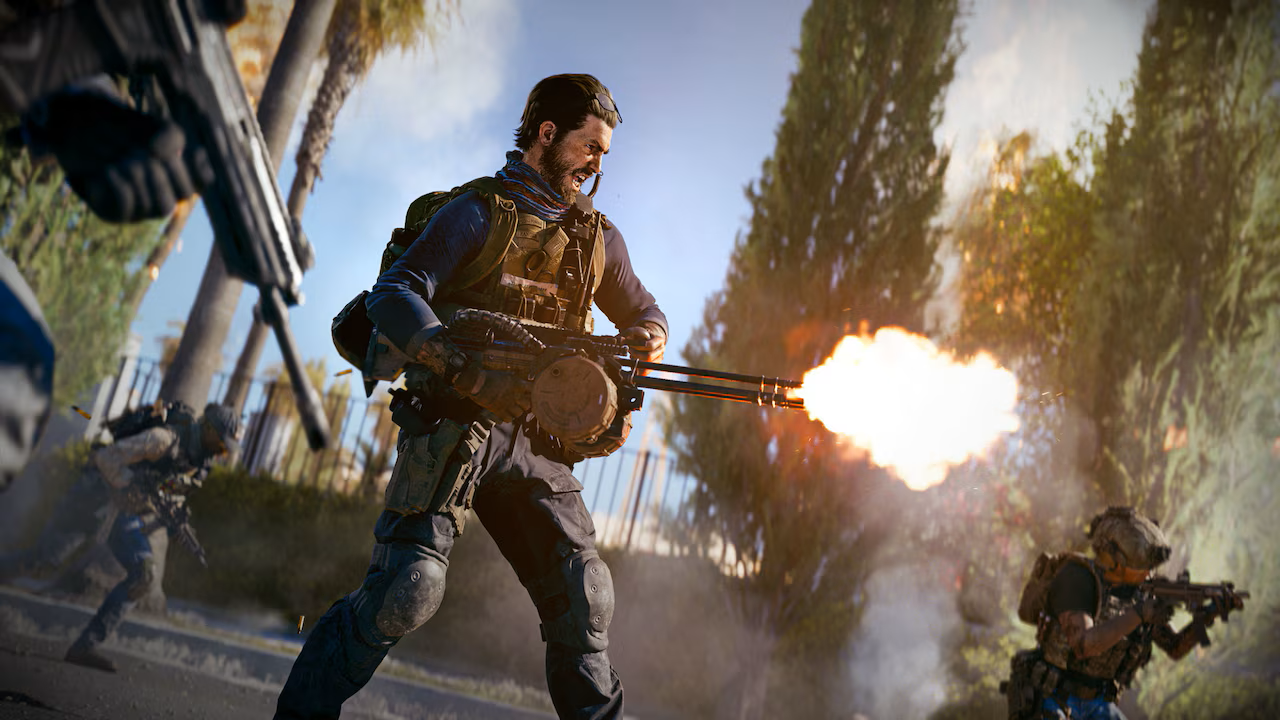
Despite its unwillingness to engage with the realities of warfare, Battlefield 6 cannot help but be shaped by it. It is fated to represent the information-saturated environment in which those weapons are deployed. It’s in the GUI like it’s in its DNA, the compression of people into data to be terminated. A red triangle appears on my HUD and I fire my rifle until it disappears and the kill feed updates. I don’t call in artillery or a drone or an airstrike; I take action directly — this is my power to wield.
The influence of tech evangelism has the same effect on America’s pursuit of a Third Offset Strategy as it does Battlefield: a ghoulish slavishness to efficiency even in death dealing. This is the machine zone, home of the “flow state,” the celebrity of which Lana Polansky pointed out over a decade ago “has encouraged a situation where games which are ideologically (and aesthetically) confrontational or self-aware don’t make it through any of the culture’s major value systems.” Seeking maximum acceptance, Battlefield 6 sands off the edges of conflicts past and present. As a result, the imagery of the Global War on Terror is laundered of the harm done to American veterans, invaded peoples, and American soft power into something to be nostalgic for, something marketable. The culture’s arteries have since constricted further, limiting passage into the mainstream only to those games which best ease their players into the zone and do not confront them with politics or disrupt their flow with artillery strikes. The hand with the mouse glides easily into a shooting position, the human subsumed into a machine for generating engagement.
Artemis here. Steven Stoermer runs his own website, Deleted Saves. Now, I might be incredibly biased, but Deleted Saves will soon be known as one of the premier blogs for videogame criticism. Both Steven and the website are worthy of your support and admiration: please consider subscribing and supporting him. Stop Caring is happy to call Steven—and everyone over at Deleted Saves—a friend of the site.
Stop Caring is reader supported and 100% free. Please consider subscribing or making a one-time donation to make more of this possible. All donations go directly to the author of the piece.