A Consumer Childhood
Fast Food, Wii Fit, and Consume Me.

Content Warning: eating disorders (anorexia)
As the youngest of three, there aren’t many photos of me during childhood. My parents’ drive to document their children’s every waking moment had long since passed. I grew up during the aughts, that weird in-between phase where analog gave way to digital, when physically printed images became a luxury and .jpeg files got lost with SD cards in junk drawers.
My favorite picture of my young self wasn’t taken by anyone in my family, but by my fourth grade teacher. Ten-year-old me smiles big and bright, eyes two happy almonds, candy canes hanging off my ears with my right hand holding another so it “dangles” from my nose. What my diseased mind cannot stop focusing on, however, is not my joy but my thick neck, my clunky shoulders, the fat mounding on the outskirts of my smile. I was born small and, in my memory, ballooned outward by the time I entered kindergarten. I never forgot that brief thinness. My anorexia won’t let me. It sticks to me like sugary syrup, threatens to drown me in a viscous wave of self-loathing and dysmorphia. I have to live with the understanding that I’ll never be that small again.
I carried an acute sense of unbelonging throughout childhood, although I had no words to voice it. It’s easy to look back now and find early signs of transness — borrowed bras, stolen glances at a girl’s puberty book, attempts to push my genitals back inside and fuming when they refused to stay there — and where I chafed against the masculinity I was birthed into. I was stout and chubby unlike the rest of the men in my family: my father is six foot three and lanky, all of his mass centered in his stomach; my brother is six foot flat and a twig, neither muscled nor fat, the picture of wiry. I despised my body early, particularly my chest and my stomach. I dreamed of replacing them both with a black hole, of waking up one day as a torso-less body happy with only my head, arms, and legs.
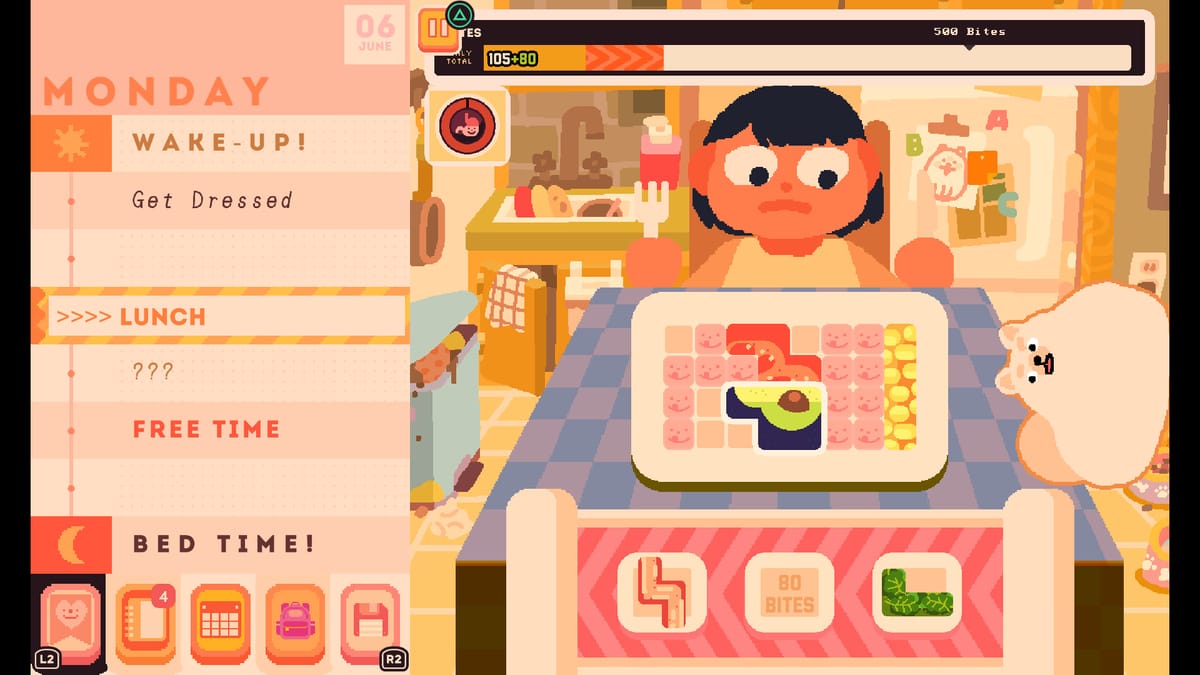
Jenny Jiao Hsia looks back at her teenage years with an equally critical eye throughout her semi-autobiographical video game Consume Me. The Steam store page describes the title as a “life-simulation RPG” about a time “when your parents, your friends, and society at large all conspired to make you feel ugly, lazy, stupid, and unloved.” Consume Me gamifies everything from packing lunch to prepping for the SAT, each life event and chore turned into a minigame as Hsia attempts to exert control over the inherent powerlessness of being a teenager. Most notably, eating transforms from a conveyor belt of endless tasty food into a grid that needs to be meticulously filled by randomly generated Tetris-shaped pieces. This activity, which repeats daily throughout Consume Me’s five chapters, is the most visceral representation of disordered eating through calorie counting and restriction, and the idea comes not from Jenny or her evil mirror doppelgänger, but a dieting magazine she finds at the grocery store.
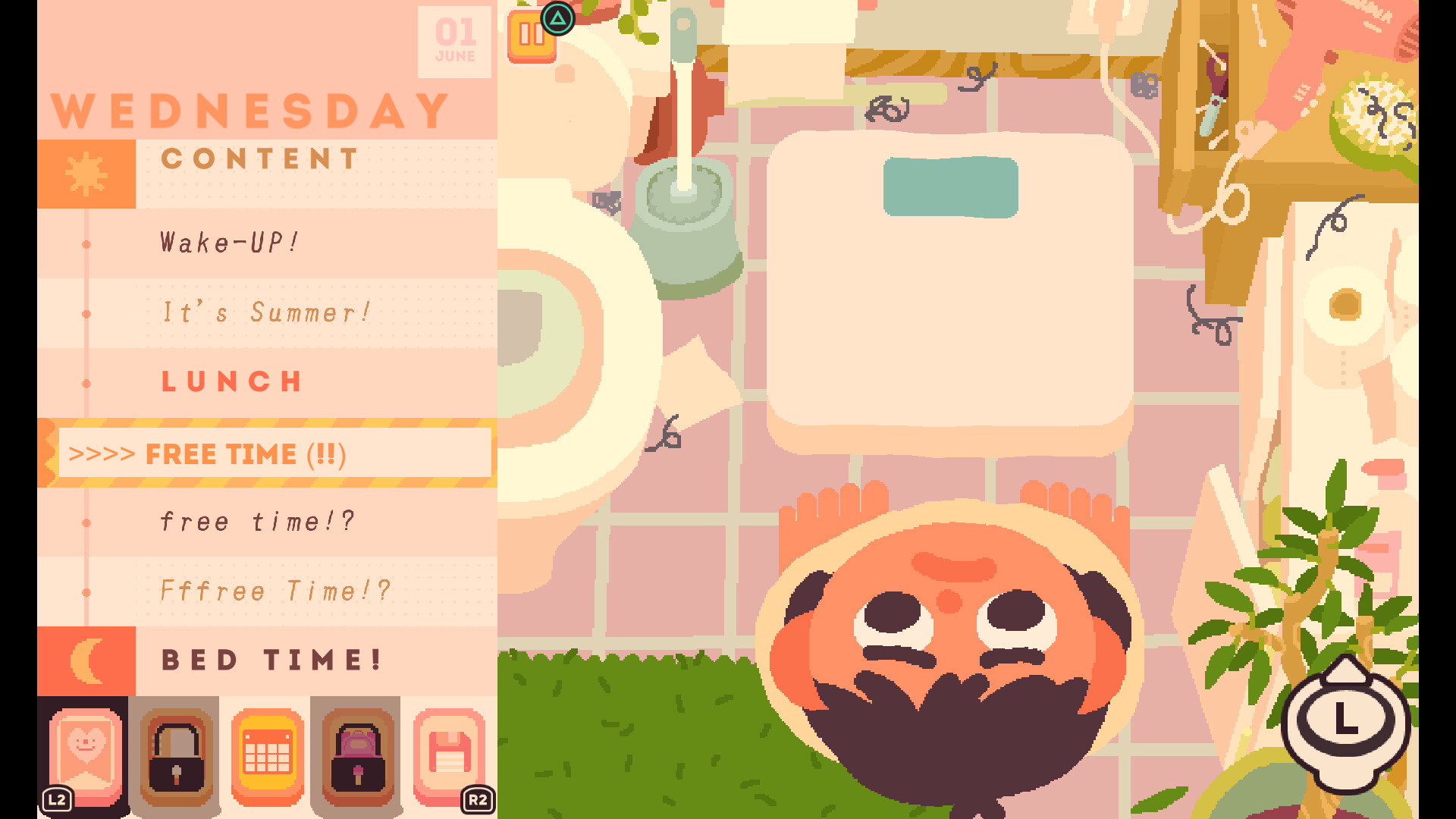
Hearing endless praise about Consume Me, I wondered how Hsia’s experiences mirrored my own, how she interpreted coming-of-age during a particular era in American culture, one in which a fear of obesity escalated rapidly among Americans. The normalization of “"hyper-palatable" junk food manufactured a snacking culture of “just one more bite,” and nearly two-thirds of children drank sugary soft drinks daily. Although I was safe from soda — the bubbles tasted spicy to me — I had a rotten sweet tooth. Frozen Hershey bars and ice cream and Pop Tarts were eaten as regularly as possible.
In elementary school, I was forced to watch Morgan Spurlock’s controversial 2004 documentary “Super Size Me,” in which Spurlock spends a month eating only McDonald’s. Projected onto the claustrophobic white brick walls of the windowless classroom, we spent days watching Spurlock eat burgers and fries, down massive soft drink after massive soft drink, destroying his health one bite and sip at a time. His liver, according to one of the doctors in the film, was “turned into paté” (although this may also have been due to his life-long struggle with alcoholism). At the start of the experiment, none of the health professionals believed there would be “too much harm” beyond a few gained pounds and boredom with his limited food choices. But at the end, Spurlock was heavy, sweaty, and out-of-shape. His breathing, even while sitting, was labored and loud. Spurlock’s weight and various “new” health problems terrified me, and I began avoiding fast food as frequently as possible. My diet didn’t change drastically — I was still coming home to eat Chocolate Chip Pop Tarts and Lean Cuisine Garlic Chicken Spring Rolls, as if the frozen health food evened out the sugary pastries — but sometimes I ate salad for lunch. I didn’t want to become as unhealthy as Spurlock.
“Super Size Me” is now viewed as sensational, a fearmongering “documentary” whose scientific claims couldn’t be replicated. But it made $22 million in the box office, was re-edited for distribution within schools, and ushered in a culture of extreme skepticism toward processed food. Dieting companies and trends, like in the magazines that Jenny can purchase throughout Consume Me, sprouted like mold. Dieting was far from new — Weight Watchers was incorporated in 1963 and Atkin's diet was originally published in 1972 — but in the early 2000s, it felt like everyone was restricting their food intake in some way to shed a few pounds. My mom, like many women, tried on diets like clothes, stocking our fridge with various meal supplement shakes and pre-portioned foods. The chokehold of culture magazines, both physically and digitally, created near impossible standards for female beauty. Images of the skinniest, prettiest women in the world were only a click away, and columnists attacked anyone who presented outside of heroin chic, Kate Moss–ass, “nothing tastes as good as skinny feels” standards.
Even the Obama administration became obsessed with solving obesity, especially among children. Michelle Obama demolished the Food Pyramid in the name of MyPlate, a dish-based initiative that prioritized portion control over the Maslow-esque ranking of various food groups. Despite the fact that portion sizes are often not related to serving sizes, which are simply a standard measurement of a food’s nutritional breakdown and not a recommendation for how much of something to eat, MyPlate made our lunches smaller, Snapple became Diet, Doritos had their fat reduced, and lunch ladies began glaring at children like myself who purchased snacks to satiate our cravings. Our gym teachers pushed us toward physical excellence through the Presidential Fitness Test, a Cold War–era remnant that tried to keep Americans from being “soft” by doing as many ups (sit, push, and pull) as possible within a given time frame. In American culture, it didn’t matter if we were children or adults: being fat was bad. But being skinny was difficult because, outside of models and Photoshop, it didn’t really exist. All us normies could do was diet and work out endlessly, or, when that inevitably failed, we starved ourselves.
Consume Me exists within the real world 2011 New York City, but it’s slanted. Jenny’s “dieting” is only vaguely influenced by the culture surrounding her. There are no meal replacement shakes in Jenny’s fridge, Lean Cuisines in her freezer, or sugar-free snacks in her pantry. She never fills journals with itemized food and drink she consumed throughout the day like Bridget Jones. There are no advertisements for Weight Watchers or Jenny Craig plastered throughout the subway, no adults loudly trying to figure out what ketogenesis actually is. Jenny doesn’t even use Pinterest or Tumblr, two of the largest and most popular repositories of thinspo and pro-anorexia content at the time. At school, she never runs the mile or participates in the insane fitness tests that expect nine-year-olds to do 41 crunches, five pull-ups, and run a mile in eight minutes, 31 seconds. The only cultural expectations that exist come from her family and her classmates: she must be the perfect daughter to her exacting immigrant mother, she must fit into a cute bathing suit for schoolwide beach day, she must be attractive for her boyfriend so he doesn’t leave her for someone better, she must be fitter than her school rival.
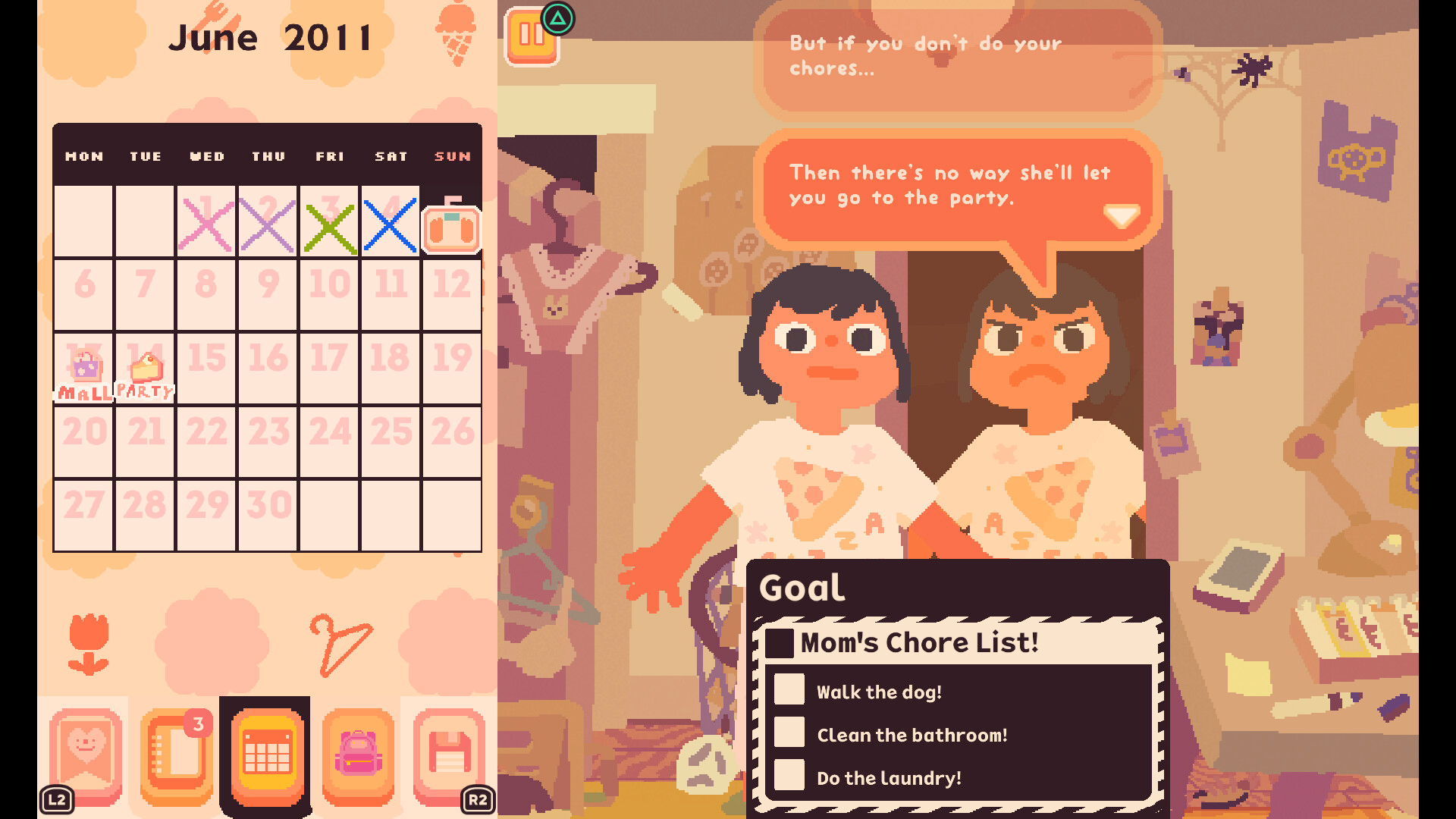
It’s indisputable that Jenny restricts her food intake to the brink of disorder. She eats a singular meal all day, reorganizes her entire life to keep her bite count beneath a certain threshold, turns toward excess exercise if she feels she ate too much, and even chews gum to trick her stomach into believing it has been filled. These descriptions fit my own struggle with anorexia over the past three years. I often skip meals after seeing my body in the mirror, a sacrifice that leads toward binging junk food late at night that makes me feel even more disgusted with myself. I once had a strict exercise schedule — run four times, climb three each week — but ate too little to completely refuel my body. I lost weight rapidly, became weak and tired all the time. I remember attending a family Father’s Day celebration in a bandeau specifically so people would see my flat stomach. I craved compliments, hoped they could fill me in a way that food didn’t, but felt only guilt when I received them: I looked good because I was sick, and I was sick because I wanted to look good.
Anorexia and dieting may be intertwined but are separated by magnitude and intent. Jenny and I want to be thin, we want to be small, we want to take up as little space as possible, and we starve ourselves to get there. But the consequences of Jenny’s starvation are minimal. It’s possible for Jenny to binge eat if she sleeps on an empty stomach or to fail chapters by not completing the required tasks, with subsequent attempts lessening the challenge, but I never experienced either. I was so good at managing Jenny’s stats and tasks that I didn’t even notice the game had a dynamic difficulty curve intended to mimic the extreme nature of a worsening disorder. Execution does not live up to intention, as the status effects that Jenny suffers from — migraines and extreme food cravings that need to be dealt with immediately or else the day is a wash — aren’t representative of the breadth of real world symptoms of prolonged starvation. Feeling faint, breaking out with acne from hormonal imbalances, suffering from extreme brain fog as her brain gets digested for nutrients, having hair sprout around her body to keep it warm in the absence of calories to burn are all “dark aspects” of disordered eating, as Hsia refers to them in an interview with Polygon, that felt too “gruesome” (co-creator AP Thomson's description) to have in the game.
Disordered eating is not clean nor easy. After trailing me throughout my childhood and teenage years, my anorexia blossomed in my early twenties. My brain was colonized by thoughts of restriction and self-loathing as my disorder took over my entire life. I never stopped thinking about food — not while attending lectures about artificial intelligence, not while reading boring academic theory, not while writing papers or freelance essays, not while traveling, not while laughing and loving and kissing and reading and watching movies and listening to music. My life became about my next meal, what it would be and how badly I wanted to skip it. I didn’t count calories or pre-portion my meals as Hsia did. I avoided eating entirely. I ran 5Ks on an empty stomach. I would wake up in the middle of the night with such extreme heart burn that I bought Gaviscon in bulk. I cried outside the Sacré-Cœur, the whole of Montmarte beneath me, certain that I was going to wither away and die. I underwent an upper endoscopy without anesthesia, a kind Irish woman whispering into my ear as I coughed and choked and sputtered for five minutes while doctors stuck a camera down my throat to make sure my stomach acid wasn’t causing permanent damage to my esophagus. Despite knowing how miserable it made me, how bad it was for me, I never truly stopped restricting.
Because of my history, I was thrilled by the concept of a video game attempting to reckon with the dangers of disordered eating, and the tutorial of Consume Me delivers. Jenny, after having her weight criticized by her mother (which, same, girl), decides to eat less and track her bites, giving herself five days to learn how to diet before weighing herself on her scale. She does chores, works out more, and plays Food Tetris for the first time. When she finally goes to weigh herself in, the music screeches to a halt, a sharp synthesizer giving way to rumbly, anxiety-inducing white noise as the scale races through numbers before landing on her actual weight, which is never given. A successful weigh-in only provides a digital thumbs up, which is enough encouragement for Jenny to continue on her quest to starve herself into smallness.
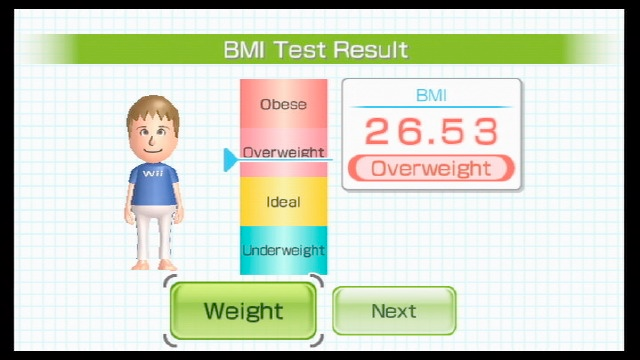
The tutorial reminded me of being a child sneaking into my parents bathroom to use their scale. Clothes off, of course, to be as accurate as possible. Clothing would only throw off my measurements. I wasn’t aware of my food intake at the time — I was feigning being the perfect, mentally stable, non-problematic child who ate three meals a day, the polar opposite of my older sister who was struggling with anxiety and rarely touched food. But the moment the scale started placing me within triple digits, I stopped weighing myself. I didn’t want numbers confirming that I was fat and ugly. It was around this time that I began to beg my dad to bring me to the gym with him, that I threw myself completely into fencing, that I tried to merge my love of video games and desire for health by playing Wii Fit. I’ve floated around multiple support groups, and almost everyone I’ve talked with mentioned how the Wii Fit Balance Board absolutely destroyed their self-confidence. Outside of the minigames, Wii Fit had a Body Test, where the Balance Board attempted to measure a user’s BMI — a terribly inaccurate measurement based on the ancient and flawed practice of defining the “average [white, European] man.” The sound designers and animators absolutely obliterated anyone within the overweight or obese categories, ballooning our Miis while the cheery voice of the Balance Board exclaimed, “That’s obese!”
Shame fueled my and Jenny’s eating disorders, which already feel embarrassing to struggle with. While it’s tempting to narrativize our disorders, to place a framework and wrangle something chaotic into something understandable, it’s dangerous to showcase weight loss and diet tactics because people will steal them. Disordered eating is notoriously monkey see, monkey do. It’s understandable that Hsia would want to skirt the darkest aspects of her disorder to avoid negative inspiration, but in minimizing Jenny’s disorder into “dieting,” she avoids letting players experience first hand the problems of being a messy anorexic. Through their interactivity, video games are uniquely suited to recreate dangerous actions and mindsets without physically harming the player. Letting people experience Jenny’s anorexia completely, letting them see the positives of dieting slowly crumble into a self-harming obsession that destroys her body and mind, could have allowed Consume Me to do what disordered eating literature, film, and TV can’t: turn sympathy into empathy through “first-hand” experience.
And, to their credit, Hsia and Thomson did initially intend for these darker aspects to appear in the narrative — the ending montage makes brief mention of a cut section where Jenny vomits in college after a particularly bad binge. But throughout the ten year development period, Hsia grew reluctant to be honest about her disorder, explaining candidly in an interview on “The Secret Life of Games” podcast, that “from a maker’s standpoint, I don’t really wanna explore this stuff anymore. I don’t want to do this, make a game about all the really dark times.” Jenny’s anorexia was reduced from the game’s focus into the inciting incident that ties together disparate minigames about regular teenage life, diluting a powerful story into something sugary sweet for general consumption.
Without “dieting” at its core, Consume Me is a charming but standard coming-of-age narrative about being a teenager with self-image issues, about trying to be popular, about being in your first serious relationship, about applying to college. (It’s also a little bit about how loving Jesus can cure your hunger and fix your migraines.) The story pointedly refuses to see not only how an eating disorder fits in among these goals, but also how it finds fertile soil inside over-achievers, those of us who turn two hours into three, who can crank out essays in a matter of hours and binge study guides the night before a quiz. People whose brains are ripe to falsely believe we need to do more and be less.
Consume Me grades players in the final chapter based on how many goals were missed and game overs occur. I got an A+, never once getting a game over, never once failing a necessary objective, never once letting up to keep Jenny from burning out. It was the most damning evidence that Jenny and I share the same maladies and behaviors, that we both let our external lives consume our sense of self and innate desires. It was the closest the game came to implicating me in toxic behavior.
Where I still struggle with food, Jenny just stops dieting at some point after dropping out of college, something the ending montage acknowledges cheekily — as if the cute tone will make the lack of a true resolution go down sweeter. No one is ever cured of an eating disorder, and anyone who tells you that they are is lying. Getting better is a matter of maintenance, of learning to ignore the disordered whisper in my brain and eating whether I want to or not. Of building a better relationship with food and my body, slowly and intentionally. The cycle of disordered eating remains intact within Hsia’s archival materials that inspired Consume Me’s design — her food journal, which documented every bite and calorie eaten for years; her color-coded to-do lists, which remain unchecked and vague; comments about the disorder itself, which softened from binging and restriction into simple dieting over time — but in this telling, her story drifts into the realm of safe fantasy.
Consume Me twists Hsia’s journey toward recovery as something almost accidental, as if she simply grew out of her twisted thinking and restrictive habits over time. I do not want to seem like I’m placing the undue weight onto Hsia: I never expected Consume Me to cure my disorder, and I never believed it was anything more than one girl’s story. It’s difficult for me to blame Hsia for obfuscating the true depths of her disorder. Anorexia is bright and hot and difficult to stare at for long periods of time. But I finished Consume Me feeling sour and bitter. As a fellow anorexic — one who still struggles to eat three meals a day, to walk into a grocery store and purchase the basic necessities, to have a normal, non-disordered relationship with food even after a year of working with a nutritionist — I felt abandoned by Consume Me. My disorder deemed too dark and too much for general consumption. It wasn’t as painful as having a hunk of plastic call me obese, but in some way it may be worse. If Hsia can’t face her disorder after ten years of working on Consume Me, I worry about my own writing, words typed in the midst of the storm. What am I to do since my anorexia can’t be forgotten, looked away from, or prayed away? How am I supposed to not let it consume me any more than it already has?
Artemis here. Stop Caring is reader supported and 100% free. Please consider subscribing or making a one-time donation to make more of this possible. All donations go directly to the author of the piece.