Playing The Plague Doctor
A Pathologic 3 review for Pathologic sickos

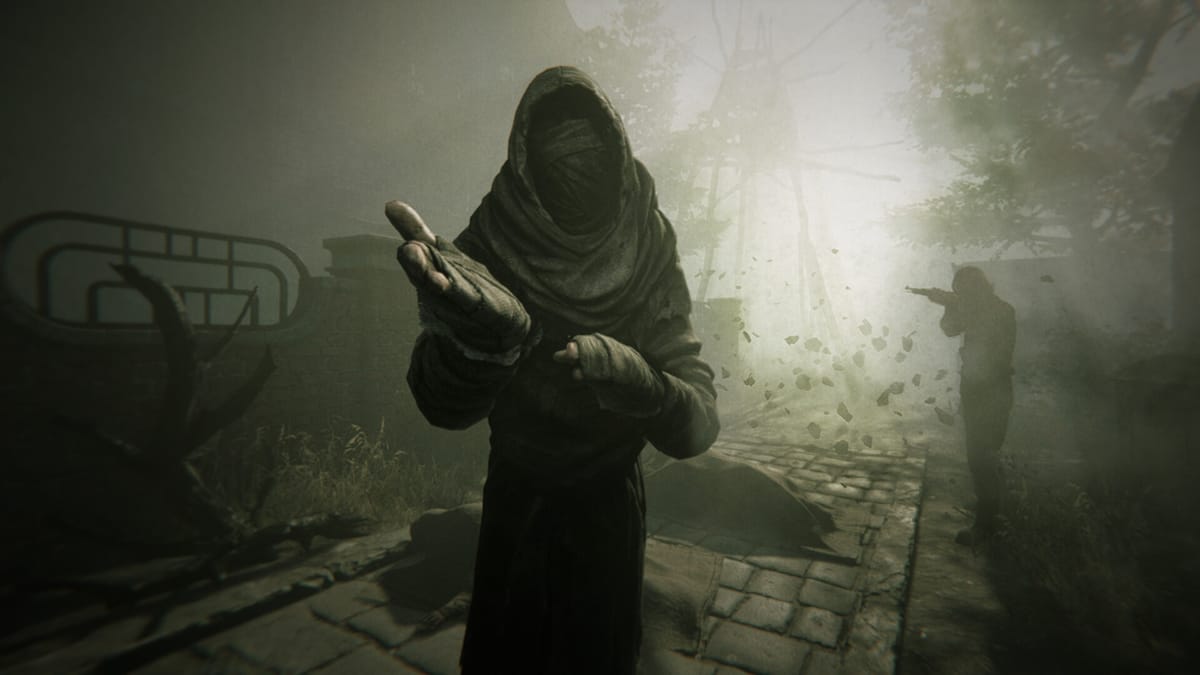
The Town on the river Gorkhon has the plague, again. It is the second time its inhabitants have been afflicted with the Sand Pest. Maybe it's the third time the town's been ill, or the fifth time. Maybe it's always been living with sickness, festering beneath, a beating heart nestled underground, pumping its toxic blood through the town's roots.
Some say this illness is the voice of the Steppe, angry at the real pestilence—humanity— maddened by the soot and the smoke that it brings (for the Pest is always afraid of fire). There's a reason why we don't drink from the river, why we don't pierce the earth without knowing the Lines: because the heart is beating tainted blood, and it whispers, but only to those who are able to hear it, those attuned to the ground and the dirt.
Some say the Sand Pest is Death itself, come to take its toll from the only place in the World in which the impossible happens. Improbable stairways, an immortal man, strange creatures borne from mother Boddho herself. The Polyhedron stands, defying all laws of gravity, but can you hear it creaking, that horrid sound? Or maybe it's the voice of the Plague, screaming like a Shabnak.
Enter from stage left: Daniil Dankovsky, Bachelor of Medicine, head researcher at Thanatica, and sworn enemy of Death itself. A pompous city-boy, the colonizer-man, a sneering human-from-the-Capital, with a mind engorged by scientific logic. His nose is, frequently, so far up in the air you can see his brain – and it can see the future! Behold: it is speaking in Latin! Errare humanun est? You forget the second part, dear Bachelor: perseverare autem diabolicum. He controls destiny yet cannot face his own, so he will fail, time and time again, of ridding the town of the dreaded disease.
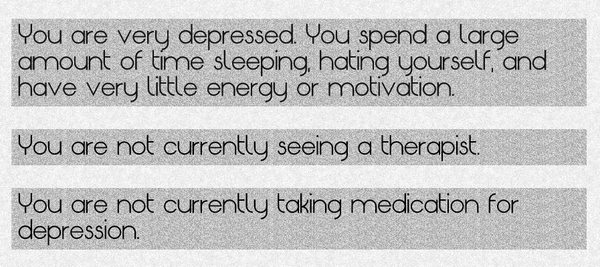
They say that, for 13 days, a mad doctor ruled the town. I saw him, pacing through the streets with maddening breakneck speed, or wandering morosely, kicking metal trashcans just to push himself away from melancholy. Pathologic 3 does away with all the survival gauges of its previous iterations. Gone are the parched throats, hungry stomachs, and tired eyelids. The Bachelor has only one bar to balance: his fragile mental health, fluctuating wildly from suicidal apathy and heart-stopping hypomania. And how does Daniil balance this emotional teeter-totter? With drugs, of course—small vials of morphine to tranquilize him, snorted snuff to pep his step.
The previous games, which made you purposefully suffer by forcing you to traverse vast distances on foot (at walking speed, no less), have also had their path-tracing re-done. The town is a sleeping bull, segmented by its body parts and organs, but Dankovsky does not know this, nor does he need to: exit through the border of a neighborhood, pick a section of the town and watch the bipolar doctor trace the line to his objective.
The Plague itself is also, less personally affective: Daniil is, miraculously, immune to the Sand Pest, but is no less dares to sap at his health, both physical and mental, with brutal force. It has been personified, seen through the Bachelor's eye as a screaming, aggressive woman-monster. Load the Prototype with belladona, ox bile, novocaine (a toxin, a reagent, and an anesthetic), then fire it, watch the spores dissipate, stop the monster in its tracks. If empty, lighting a bonfire is a good enough diversion.
The three Pathologic protagonists saw time linearly, each day preceded the next. When the Haruspex, in Pathologic 2, sought his father's murderer, and became a menkhu along the way, he too saw time as a straight line. When the Bachelor rules with an iron fist in Pathologic 3, time is a series of threads that can be cut, altered, manipulated. (Un)lucky for Daniill, he produces time: like the Cathedral, torrents of silver amalgam flow through his veins. He can steal people's time so long as he grants them a painless, merciful death.
While these changes threaten to pacify what was, ultimately, a hostile experience, Pathologic 3 has not lost its bite. The game has been streamlined but not simplified: the characters still speak in riddles, with the same biting literary caliber that can be expected from Ice-Pick Lodge, and the same tensions, brought on by too many things to do and not enough time to do them, still force the player's hands to make difficult micro and macro decisions.
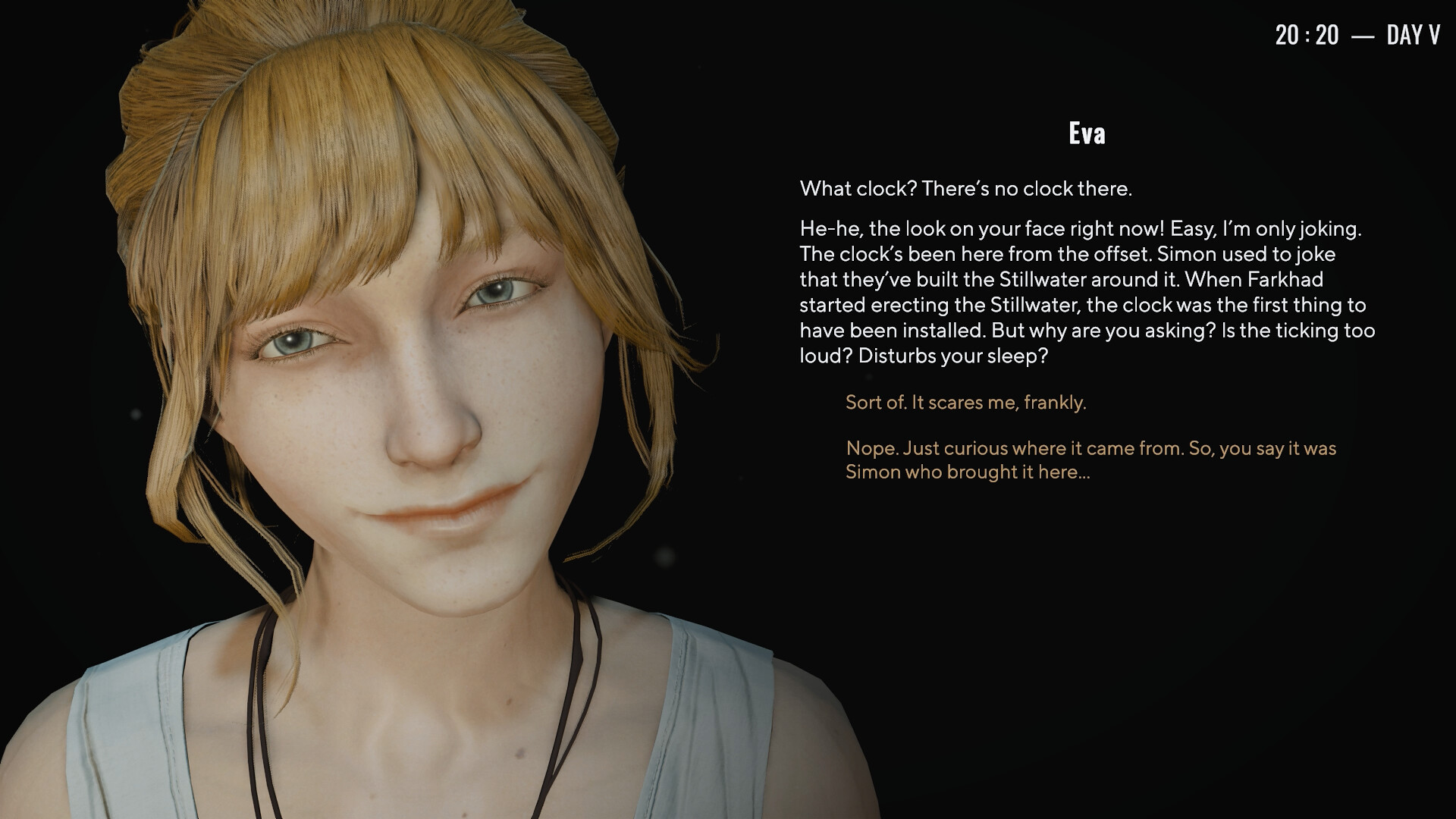
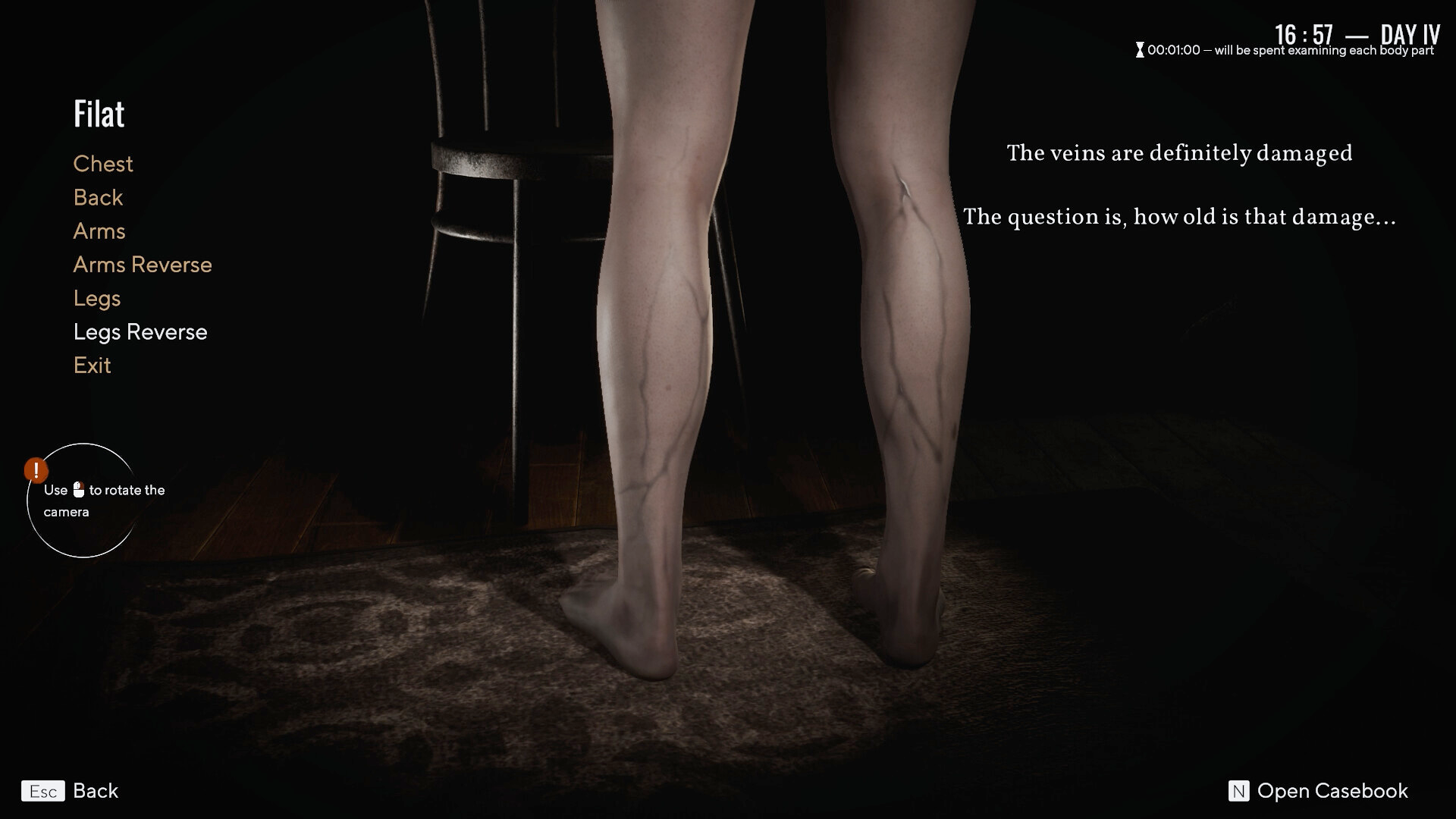
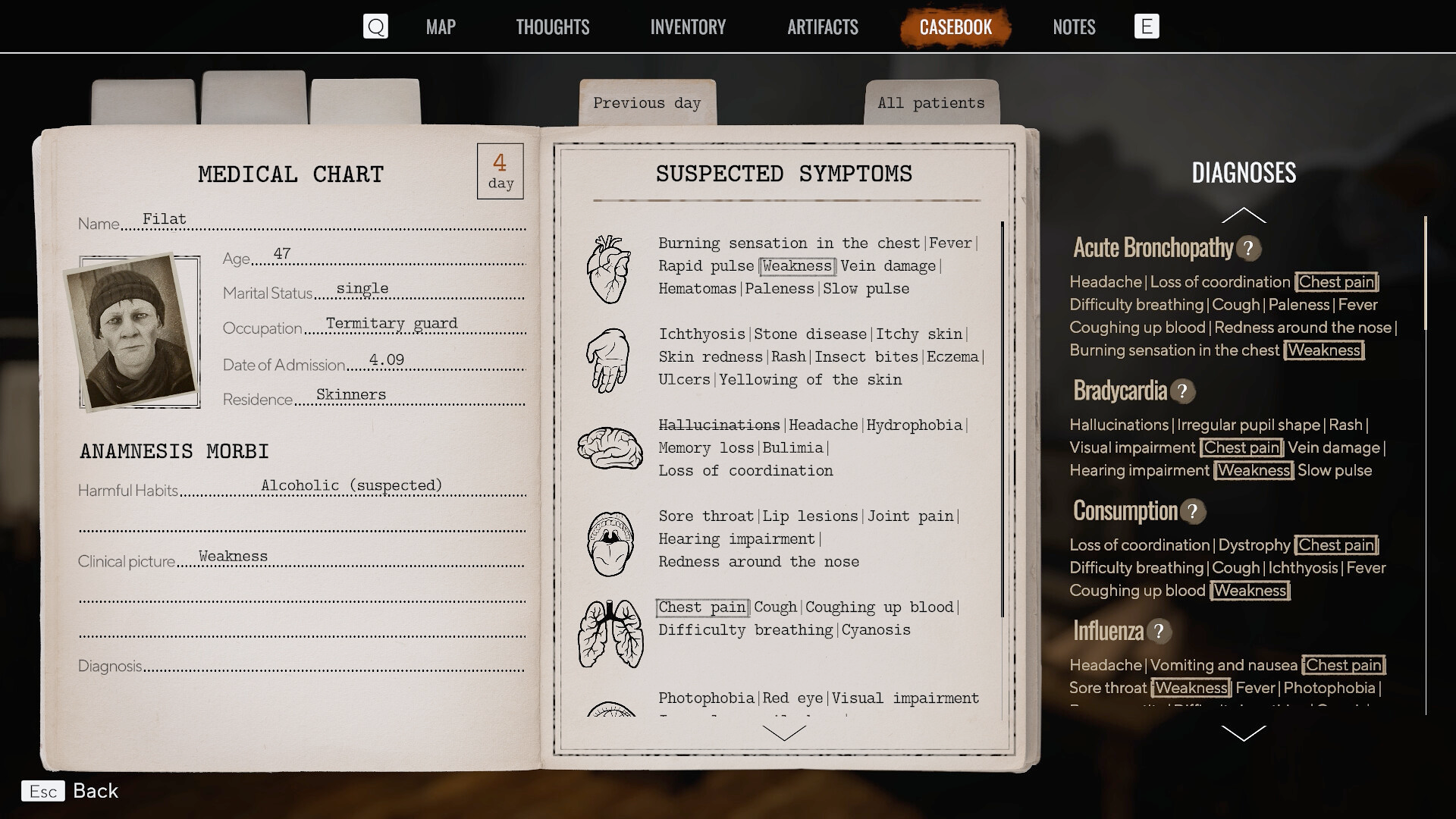
Once you open up a proper hospital in the Theater, diagnosing patients gets ever more difficult—many symptoms are red herrings to divert you from the real infirmity that resides within these frail bodies. Many questlines have to be completed for you to unlock useful decrees to sign in order to lower contagion enough to progress through the game. How many timeloops until you succeed? If your amalgam runs out, if you make enough bad decisions, there is still the threat of permadeath. Time is your second adversary, right behind the ever-present Plague.
Predict the past and future, saved those who have died, but the loops do not get easier as the game reaches its conclusion: resource scarcity abounds, time-travel nectar is limited, and many in the Town will hate your guts no matter what. The Plague is still a worthy adversary, the ability to alter the flow of time has not made the Mad Doctor's goal any easier.

Following along in the steps of its predecessors, Pathologic 3 is both remake and sequel to the original, so it re-explores the same dour setting, the same philosophizing characters, but each re-visit fundamentally re-evaluates the metastructure of both the Town-With-The-Plague and the game itself.
The original Pathologic, despite is HD re-release, is a work of impenetrable fiction. If you scream to the heavens asking for friction, the Powers That Be will deliver in spades. Walking anywhere takes time, the survival elements are the harshest they've ever been in the series, and the threads of narrative are easily impeded by bad choices.
Pathologic is a series of carefully positioned traps: characters you must keep alive may perish easily without proper resource management or by making the wrong dialogue choice. It's a save-scummer's paradise: save before talking to anybody, before you delve into an infested or rioting neighborhood (in which you can easily be contaminated by the plague, or firebombed by rogue arsonists).
So, you work around these obstacles, to gather the shmowders and save your Chosen townsfolk. You can, also, easily satisfy your base desires once you understand the rhythm of combat. By hunting the bandits at night, when sleep befalls none of the protagonists, you can sell their claws and knives for a precious sliver of smoked meat. Foresight was a boon: a sudden act of violence, or an unwanted death, done away with a quickload. In a way, you could always time travel in these games, it was just never mechanically integrated with the narrative.
With three characters all experiencing the same story but with their own twists and turns, the series already shirked oft-placated senses of continuity and clarity. The tighter focus of Pathologic 2, in which you only play as Artemy Burakh, means the dialogue and the narrative are more robust, but the series never loses its anti-player sentiments with its surmounting challenges. Pathologic 3 is tighter, even more focused than the others, so it stands out as being simpler to play on a mechanical level, but only those who Know The Lines, who have prior knowledge of the games that came before, can position 3 clearly in its proper context, and appreciate its innovations and complexities.
Even with prior knowledge of the games, the game will not get easier to interpret or to complete, for one of the main themes is the fallibility of logic and scientism. The game is not content with just eschewing known narrative tropes or raising the baseline of what a good re-quel should be, it also wants you to face its world with its own metaphysical rules, on its own terms. As I've alluded to: the Plague is more than just a physical threat. It's straight up paranormal, Lovecraftian, in a way, because it is unknowable by our limited human understanding. The town itself is a Strugatskian Zone: a delineated area where a catastrophe has struck and miracles happen.
The first Pathologic showcased Dankovsky as the easiest (yet, still brutally hard) experience. As a newcomer to the town, and given his social position as an esteemed doctor and intellectual, the town is more prone to grant him authority, lend a helping hand, or offer him guidance. He is exposed to the town's metaphysical and social oddities and is able to get lore-dumped because he does not know the Town-on-the-river-Ghorkon. It makes Pathologic 3 into an even more interesting experience when positioned with the other games: we are re-exposed to the Town for the 'first' time through the Bachelor's logical eyes, his fractured mind, but many of the dialogue options won't make sense without either prior knowledge of the series or, in the most meta-fucked ways, unless you've beaten Pathologic 3 or experience its future story-beats. Follow the path of logic, the game will still befuddle you.
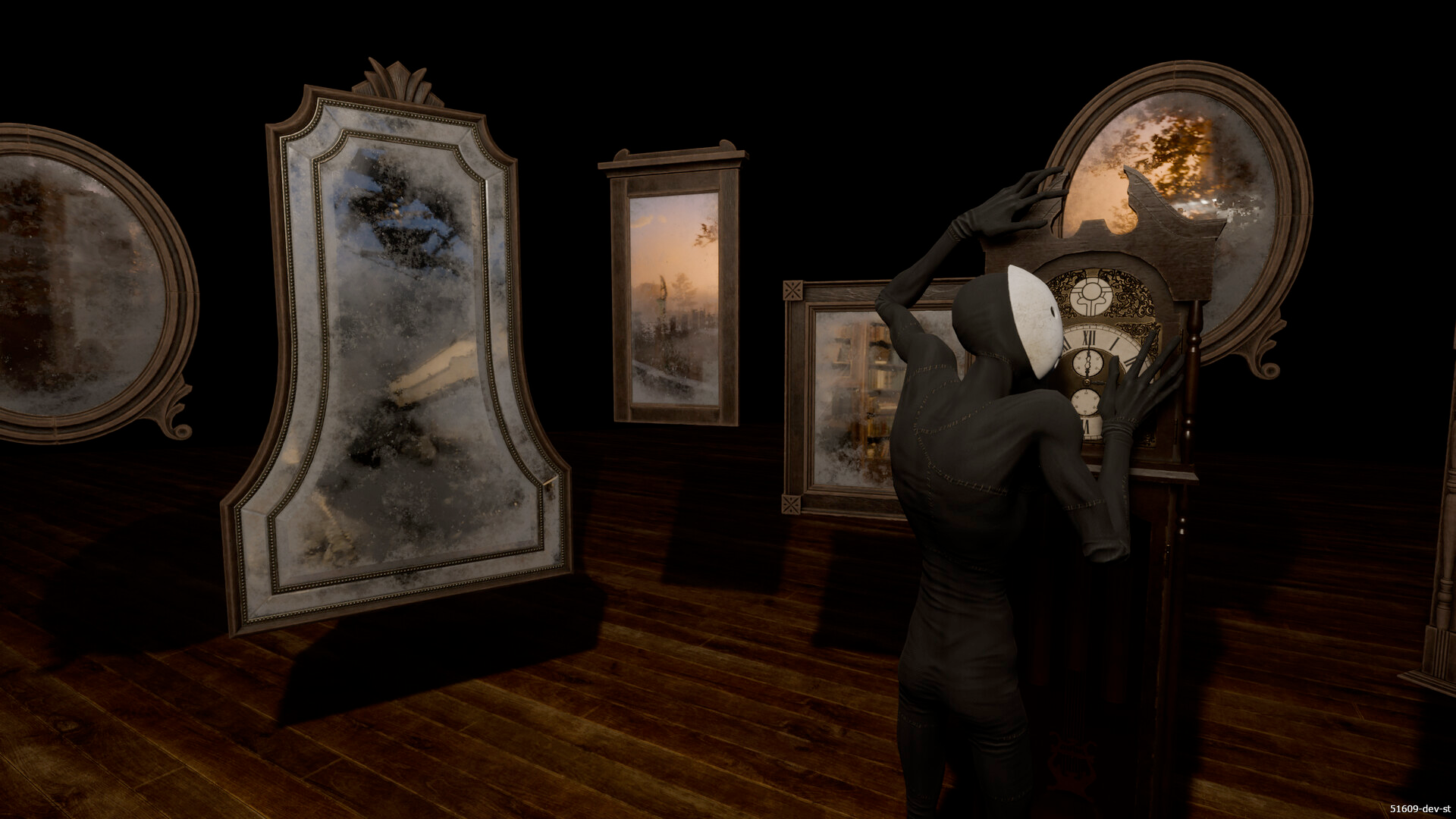
Dankovsky is too deluded by scientific dogma to respect other cultures, especially one like the one in the Town, in which the medical has been linked to the spiritual, so whenever he is faced with magic he tries to explain it away with scientific understanding. He will meet an albino, a creature from the Steppe, and explain the unique encounter away by claiming it a hallucination. He will philosophize about human nature with a rat. Yet, he accepts the rules of time-manipulation almost without hesitation, he too can make decrees that, from a rational mindset, make no sense: what will stopping all the Town's clocks do? Why does he appease what he would call backwards superstitions by erecting scarecrows to scare away the Shabnak?
Logic fails the Bachelor because, like all characters, he has to suffer through what has been the series' prevalent theme: duality and its failures. Dankovsky suffers from binary thinking—something is either logical, pertaining to his clouded worldview, or it is asinine, superstitious, and pertains to folks of lesser intelligence. Yet, his dual-nature is what causes him so much suffering, makes his life an emotional rollercoaster of drugs, depression, and anxiety. The only way he, and the player, will succeed is by escaping the narrow confines of dichotomies and logic. The town has no need for either.
Artemy Burakh, too, had to deal with the trifles of dualism. Having recently returned from his studies at the Capital at the start of Pathologic 2, he is stuck between the teachings of the Steppe, his father's people, and his newfound medical intellectualism, which sees his pater-culture as superstition and savagery. Artemy has to cure the Plague by seeking a path outside of binaries: by conjoining both scientific medical knowledge and shamanism.
Daniil is too far gone into one side of this binary, but to develop a proper cure to the plague he will have to walk the same paths threaded by mysticism, and he must face them as such, not as products of his tenuous grasp on reality. Dualism rules his mental health, his decrees, his actions, but it's only by facing his intellectualism and accepting the ambiguous and illogical aspects of the Plague that he will learn succeed.
The player, too, has to face the game with these same tensions and concede to ambiguity. You are the player, and the Bachelor, and the actor cast to play Daniil Dankovsky: allow yourself to go a little crazy while playing Pathologic 3.
Like its predecessors, it is a game that will infest my mind caverns for a long time, and will remain relevant so long as any illness or dogmatism continues to cloud our cultural zeitgeist. Confront your own intellectualism, time-travel, squeeze a water lever for the mania, divert away from dualism, binaries, scientism, seek a Third Path, and the Town-On-Ghorkon might have a fighting chance.
Stop Caring is reader supported and 100% free. Please consider subscribing or making a one-time donation to make more of this possible. All donations on this article go directly to the author.
If you are interested in writing for Stop Caring, please reach out via the email listed on the contact page or dm Artemis on Blue Sky.