Pay Attention to Incomplete Games
Untitled Paper RPG shows us that the allure of unfinished games lie in the tantalizing promise of what they could have been.

Within Leonardo da Vinci’s unfinished artwork, The Adoration of the Magi, is the very image of the three kneeling Magi, as they offer gifts of gold, frankincense, and myrrh to baby Jesus. This is foregrounded by sketches of dilapidated buildings and clashes between men on horsebacks. A piece commissioned by Augustinian monks for the church of San Donato, the piece was left incomplete when Leonardo eventually left Florence for Milan. Despite its fractional state, the painting continued to astound art lovers for decades due to its underpainting; it’s a glimpse at da Vinci’s creative process, with the initial outline of his painting coated in earthy brown, the piece meant to be fleshed out in colour later. For instance, some figures were barely sketched out, whereas others were nearly completed, with this offering insights into how he may have approached his drawing of human figures through his keen understanding of anatomy. Other details, too, furnish The Adoration of the Magi, such as his plans to blend the various dynamic shapes and figures of the scene together through sfumato, a painting technique for softening colour transitions.
Famously, unfinished artworks like da Vinci’s piece are compelling and enigmatic, their underdrawings hinting at the artists’ process. Likewise, the same may be gleaned from unfinished games, with these offering a tantalizing look into how they are made—and even why they are discarded. But unfinished games are burdened by stigma and uncertainty. Their existence is, at times, obscured by a litany of reasons, from legalities around intellectual properties to a general reticence around incomplete works. Thus they are often left unreleased, rarely seeing the light of day.
This is why Untitled Paper RPG, a Paper Mario-inspired game by A Short Hike creator Adam Robinson-Yu, is such an anomaly. Launched as a demo in June, the game feels particularly polished at first glance, but is largely incomplete with several narrative loose ends. Robinson-Yu has shared that he has no plans to finish it. “After releasing A Short Hike and working on the subsequent updates and ports… I didn’t really want to go back to this game? The development for the RPG had become difficult, which was why I took a break from it in the first place,” he wrote on the game’s devlog.
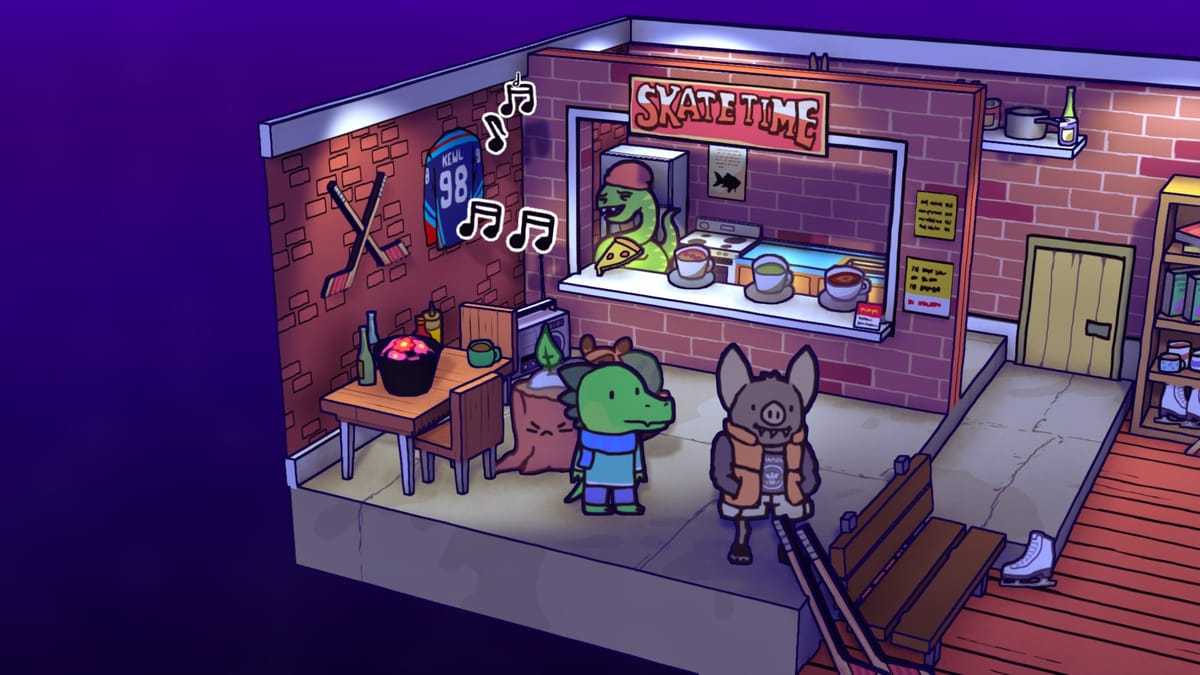
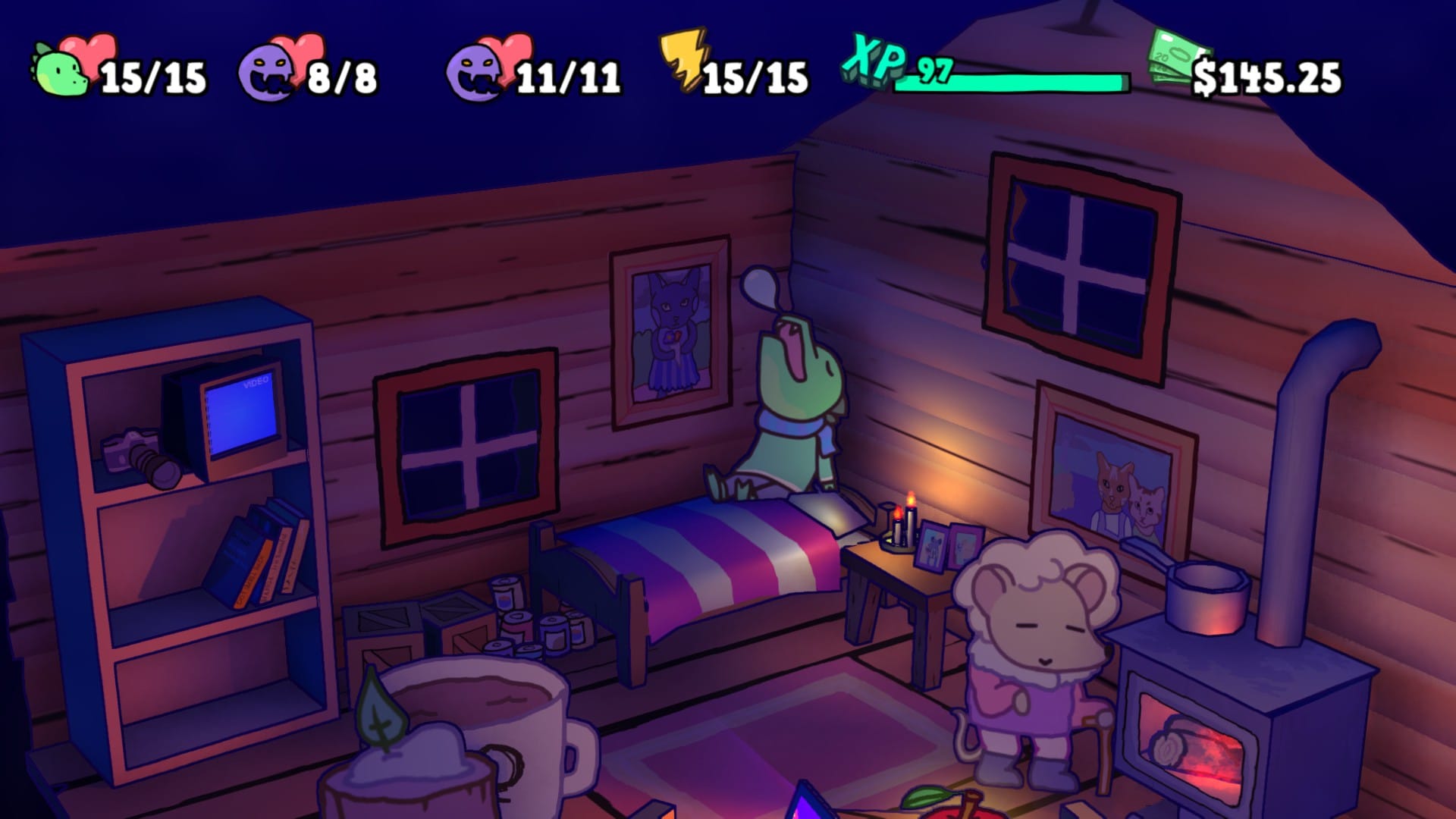
Which is a pity, because the Untitled Paper RPG demo is bursting with personality, its whimsy and mischief bringing to mind the playfulness of Nintendo games. You play as a crocodile who’s writing a birthday card for your feathered friend Ava. While collecting signatures for the card around a sleepy little town, you’re abruptly roped in for an adventure by Ava herself, who’s concerned that a dastardly plot is afoot. You see, several things have been misplaced and, in a quietly amusing scene, a elderly rodent tells Ava that her walking cane was stolen from her cabin. “Can you believe the nerve of some people? Stealing a walking cane from an old lady!!”, she rages on, her paw gripping her cane in anger. That was a spare, actually, but she still implores you to find her original cane nonetheless. Ava is pumped and too keen to oblige, while you trudge along reluctantly.
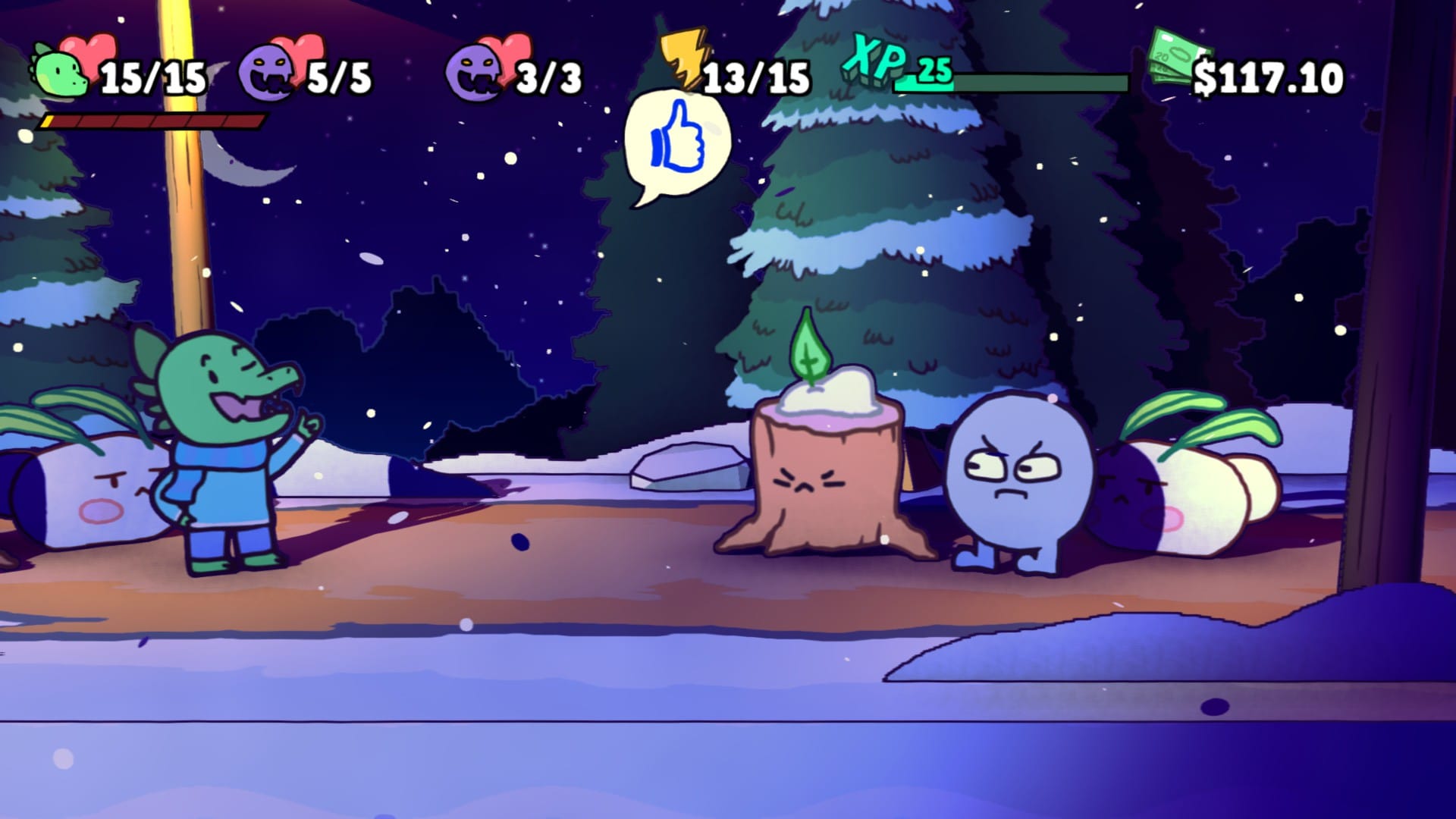
Untitled Paper RPG is full of effusive charm, a trait that’s characteristic of Robinson-Yu’s oeuvre of games. From the liveliness of its adorable crocodile townfolks to the expressive candour of every character, the game unfolds through its quirky personalities and dialogues. A crocodile named Tim becomes wildly ecstatic at the thought of having pizza for dinner. Another grumpy, exhausted crocodile bemoans the dreariness of Mondays—and every other day. Even the foes that you meet along the way are distinct, from thieving squirrels and corn-hungry owls who are eager to stop you in your tracks, unless you can befriend them mid-conquest. Plan your moves right, and these critters can be convinced to join your team, courtesy of a “befriend badge” that a fellow crocodile pal has given you.
Its turn-based combat, too, is an enthralling loop of attacking and defending with some real-time flourishes. You can shield yourself and attack twice by timing your button tapping right. Your new buddies can level up alongside you, granting you an arsenal of diverse attacks with which to customize your party’s offence. In a way, Untitled Paper RPG also invokes the pastoral fantasy of the Pokemon series; you befriend (collect) critters in combat, and you train them up such that they’re at their fighting fit.
But there are a few issues with Untitled Paper RPG—concerns that Robinson-Yu himself pointed out in the game’s post-mortem. Like the thematic disconnect inherent in the Pokemon series’ cycle of catching and enslaving cute critters, the combat encounters of Untitled Paper RPG seem dissonant from the setting’s genial, affable atmosphere. This is a conundrum that may be resolved through a cohesive story, but Robinson-Yu has, of course, written about how he also didn’t have an overarching narrative in mind. “I started the game on a whim and every decision I made was on a whim. I had already made characters, levels, and systems before I started seriously thinking how they'd fit together into a story.” He also has his reservations about turn-based combat, as the battles are an obstacle to exploring Untitled Paper RPG’s world. These challenges resulted in him simply putting the game’s development aside, to the point where he couldn’t envision finishing the game.
These may seem like quibbles and, to an armchair critic (like myself), barely pernicious. We’ve seen a lot of games with less polish that have been released to the wild, even to great fanfare. That’s not meant as a critique; instead, the biggest problem with unfinished games is that we just don’t see a lot of them. Unlike the allure of incomplete paintings and artworks, these games are largely perceived as errant mistakes. Take the furor over the original No Man’s Sky, or the release of buggy games seen as being rushed to the finish line, such as Knight of the Old Republic 2: The Sith Lords and Balan Wonderworld. Then there’s horror game Allison Road, which was said to be a spiritual successor to P.T. but was abruptly cancelled and left unreleased. They’re not acknowledged as important works to be examined and analyzed, unless they’re gradually nudged to completion. They may eventually be overlooked.
But there’s a thrill and intimacy in experiencing the deliberately incomplete Untitled Paper RPG. What the game does, triumphantly, is point to Robinson-Yu’s uncompromising ethos as a developer, while offering an opportunity to see beneath the polish of a complete game: partially crafted landscapes, barely fulfilled concepts, and fragmentary scenes. In its detritus, we see half-baked ideas that Robinson-Yu might have intended to flesh out. An abandoned train station sits in front of a blocked train track, suggesting that inter-town travel was perhaps in the works. A lone campfire lights up an empty park in the midst of sunset—a quiet, meditative spot away from the rumpus of adventuring. Locked gates and fenced-off spaces suggest a larger and loftier vision for the overworld. Most of all, wandering through the incomplete town and at the end of the demo, with only the chirping of crickets rather than the usual jovial soundtrack in the background, imbues the game with a sense of finality and loneliness. In contrast to the light-hearted atmosphere at the beginning, the end feels like a bleak, forgotten place. Then there’s the game’s biggest travesty: there’s no way to hand Ava’s signed birthday card to her, watch her marvel at the celebratory messages from her friends. It’s the melancholy of an unfulfilled promise, a bittersweet conclusion to a game that might have been.
Considered this way, there’s a lingering appeal to unfinished games, works that can elevate the medium beyond being just a mere commercial product. If paintings like The Adoration of the Magi can be included amongst the pantheon of great artworks, then unfinished games should be afforded the recognition and prestige, too. We need more of them to be seen, to encourage more developers to share them in its incomplete state, even if these can never be finished. Perhaps then we may see a future where players will look forward to incomplete games, eagerly ploughing through every nook and cranny of their virtual spaces for hints of secrets and phantasmagoric life.
Stop Caring is reader supported and 100% free. Please consider subscribing or making a one-time donation to make more of this possible. Khee Hoon has asked that all donations for this piece go directly to the site, to help us keep the lights on around here.
If you are interested in writing for Stop Caring, please reach out via the email listed on the contact page or dm Artemis on Blue Sky.